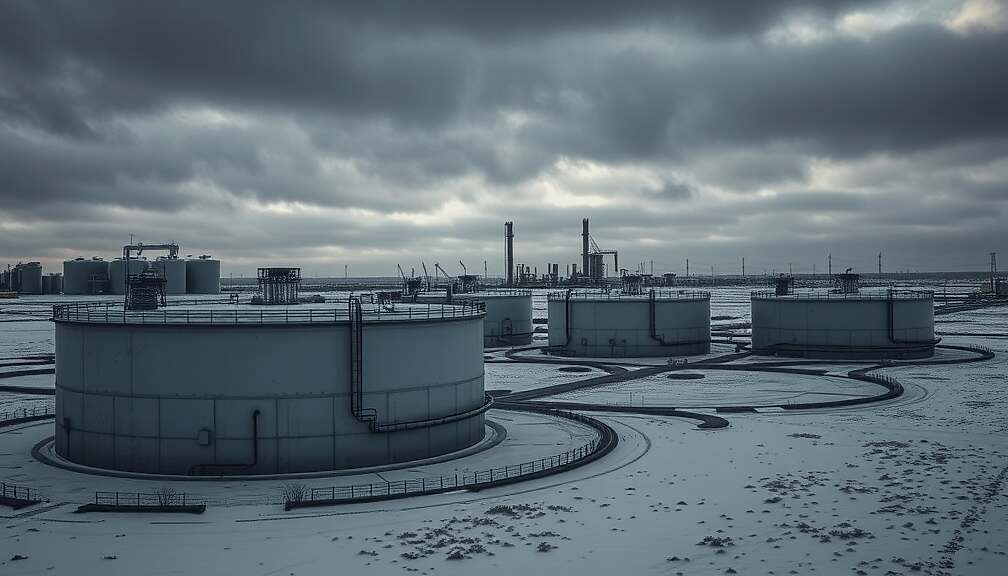
Due to historically low gas storage levels, ING Chief Economist Carsten Brzeski has warned of a potential gas shortage in Germany. He noted to the T-Online news portal that current storage levels are only about half full. While he stated that supply constraints are unlikely during a normal winter, the situation changes if several very cold months follow one another. Brzeski cautioned that an unusually cold winter could lead to problems, even resulting in a gas shortage.
Consequently, he urged the Federal Government to prepare proactively. He told the news portal that while a call for “very good meteorologists” might be tongue-in-cheek, the government must be definitively ready. Specifically, he suggests that Germany should immediately examine possibilities for procuring additional Liquefied Natural Gas (LNG) from other countries, such as the United States or Norway. According to the ING economist, sourcing this gas early is more economical than having to urgently buy extra supplies later, aligning with market principles. Alternative options, such as temporarily increasing the use of coal, were also mentioned as possibilities.
Brzeski expects gas prices to rise to around 70 Euro per megawatt-hour, representing an increase of approximately 30 percent compared to the spring. He raised concerns about a wave of bankruptcies among smaller local utility providers. He suggested that the point at which consumers started perceiving price increases might shift by about six months. He pointed out that smaller operators were already facing high market prices in 2022, but could not immediately pass those costs on to their customers. This mechanism, he warned, could reemerge during the coming autumn and winter.
Regarding oil, the ING economist forecasts prices of approximately $90 per barrel in the third quarter. This rise would have a notable impact on drivers, potentially pushing fuel costs above 2.30 Euros. Furthermore, he anticipates that even by the end of the year, roughly 15 percent fewer ships will transit the straits compared to pre-war levels, maintaining inflationary pressure. Brzeski believes that Germany will see an inflation rate exceeding three percent by the end of the year, with the August figures potentially breaking this three-percent threshold, or definitely by September at the latest.