US economist Brad Setser has issued a warning about significant deindustrialization in Germany, attributing the primary cause to the surging strength of the Chinese economy, according to his statements to Spiegel. He noted an “enormous acceleration in China’s export growth” and a rapid increase in its trade surplus, while simultaneously noting that imports into the People’s Republic have either stagnated or declined over a long period. This combination, Setser, believes is generating a “China Shock 2.0.”
Though the initial “China Shock” in the early 2000s primarily affected the US and Southern Europe-when China took over basic manufacturing like t-shirts and televisions-the landscape has fundamentally changed. Setser points out that China is now producing and exporting on a massive scale high-tech goods, including electric vehicles, chemicals, and tunnel boring machines, a development that directly challenges the industrial core of Germany.
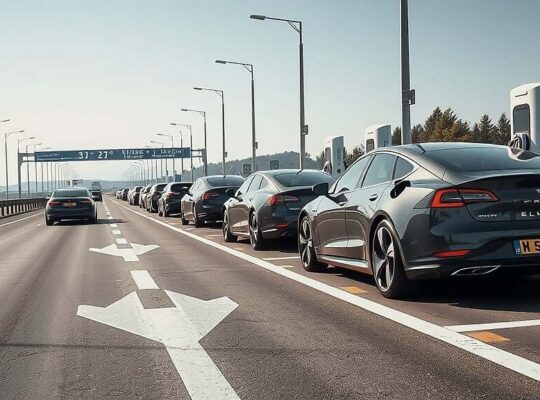
The German automotive sector, in particular, faces a major threat. China, he observes, now possesses the capacity to produce 55 million vehicles annually, enabling it to meet European demand on its own. Furthermore, China’s exports of cars have grown by over three million units per year-a volume roughly equivalent to Germany’s total overall exports. Setser argues that if Germany stops manufacturing cars, this decline will spill over into other industrial areas. He stresses that for a nation to sustain its consumer base, it must also be able to produce its own goods.
To protect Europe’s industries, Setser advocates for a range of protectionist measures. He considers tariffs on Chinese imports to be “unfortunately necessary”-and urges their implementation as quickly as possible, especially within critical sectors like automotive manufacturing, certain machinery, and chemicals. He also suggests that Europe must mandate joint ventures with Chinese investors if they wish to enter the local market, stating that currently there is no incentive for such partnerships in the region. Additionally, policies such as “Buy-European” clauses should be seriously considered. Setser summarized the situation by noting, “Germany and Europe like to play by the rules of the market economy. In principle, that is good. But others are no longer playing by those rules.”
He warns that China is likely to retaliate against these measures. Consequently, he advises that Europe must accept this, provide assistance to affected sectors, and establish “red lines” when dealing with Beijing. Brussels has sufficient leverage, particularly in areas like the aviation sector or specialized European chemicals where China is reliant on supplies. Furthermore, the vast amounts of money China holds in Europe could be frozen. Setser concluded that he believes Europe could at least secure a draw in a trade war with China, noting that “strategically speaking, that would be a victory.” He added that if the Americans observed Europe adopting a more determined yet measured stance toward China, it could increase their willingness to align with Europe against Beijing.