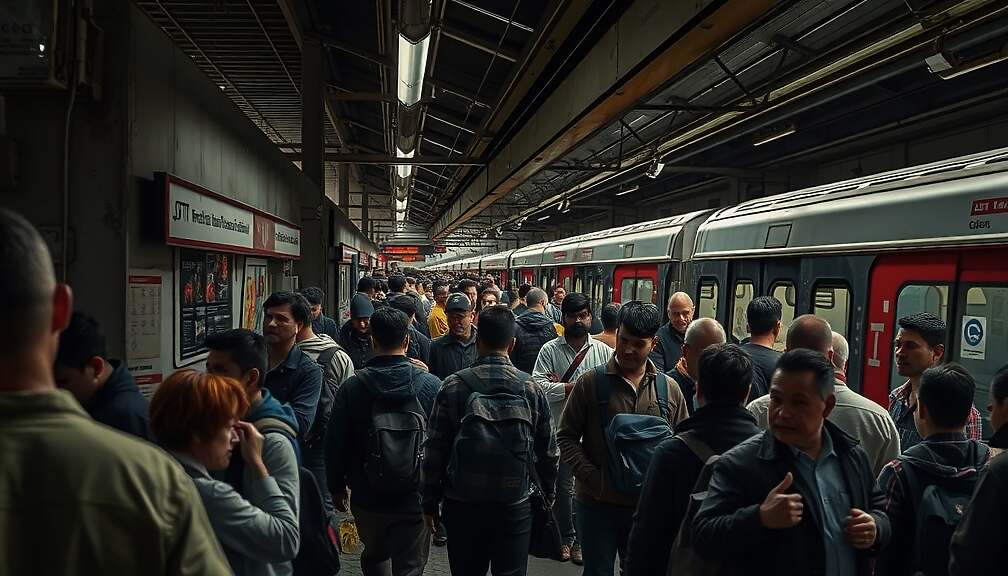
Following the CDU’s weak performance in the state election in Saxony-Anhalt, Federal Transport Minister Steffen Bilger (CDU) suggests that voter frustration over the condition of the transport infrastructure contributed to the results. Speaking to the newspapers of the Funke Media Group in their Sunday editions, Bilger noted that since taking office, he has most frequently been approached by citizens about problems on the railways. Dissatisfaction was also driven by the lengthy construction times associated with major transport projects. However, he assured readers that they are actively working to address these issues, pointing to the introduction of planning acceleration laws and immediate measures aimed at improving railway safety.
The minister highlighted the billions of euros dedicated to modernizing transport routes through special funds. “We want to be proud of our infrastructure and our railways in Germany again,” Bilger stated. Despite this commitment, he conceded that the current state of the railway system requires significant improvement, adding that the situation is “completely insufficient.” He attributed the issues to a combination of forces outside the rail operators’ control and internal problems within the infrastructure and operational processes.
Yet, Bilger remains firmly committed to his goal of ensuring that at least 70% of long-distance trains arrive on time by 2029. He framed this goal as realistic, considering the existing traffic levels on the rails, the issues in major rail hubs, and the numerous construction sites. He also critiqued past governmental policy, arguing that in the past, politicians “always set more ambitious goals for the railway but paid too little attention to the necessary expansion of the infrastructure.” Consequently, the system has been “somewhat overloaded.”
For improvements to occur, he stressed that the rail operator itself must change. “The railway must be open to change,” the CDU politician insisted. He praised DB CEO Evelyn Palla for “closely examining” issues and for “streamlining the company’s structures.” Bilger also pointed to digitalization as a source of opportunity, noting that it is projected to allow the rail network to be used 20% more efficiently without requiring the laying of additional tracks. While the minister has maintained that his cooperation with Palla has been “very good so far,” he left unclear whether she faces job insecurity if the punctuality targets are not met.