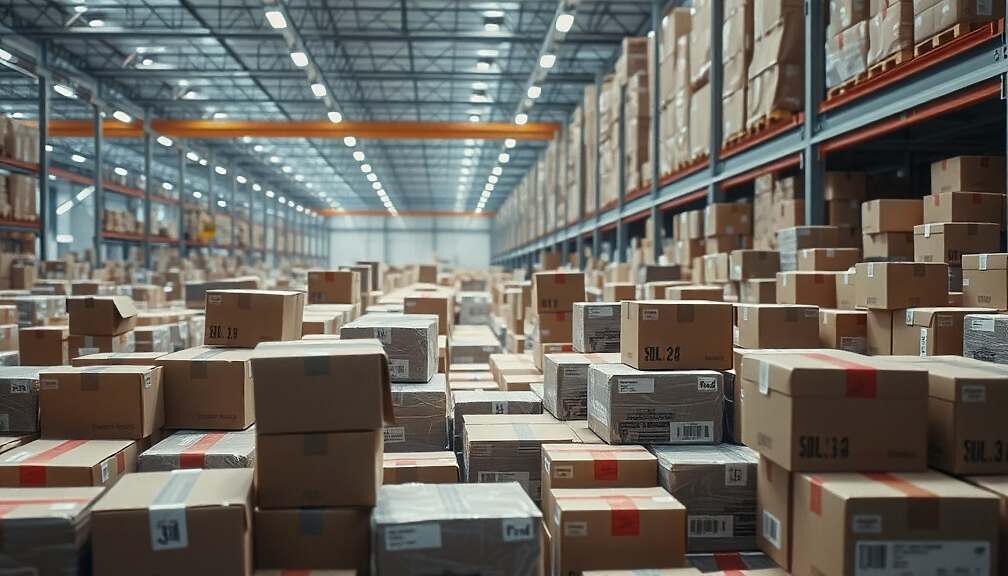
The German Trade Association (HDE) has issued a warning that despite the removal of the customs duty-free limit, hundreds of thousands of packages daily continue to flow into Germany from online platforms such as Temu and Shein.
Stefan Genth, the HDE’s Managing Director, states that these platforms will adapt and continue their operation. While the phasing out of the 150 Euro customs threshold for goods arriving from outside the EU, scheduled for July 2026, appears to be having some effect-with France already reporting a reduction of 30 to 40 percent in shipments-the sheer volume remains staggering.
Genth noted that while Germany currently lacks specific data, he sees no reason to believe the trend will look significantly different domestically. Even if there is a one-third decrease, the daily number of parcels would still run into the hundreds of thousands. He acknowledges that they are impacting the business models of these companies, yet he fears they cannot stop Shein and Temu.
According to the association chief, the platforms rely on these shipments to utilize their factory output. He claims that these companies must keep their manufacturing facilities active, and they cannot offload this “junk” quality product even within China itself, as the Chinese middle class has become more discerning, and services like Temu are not even available there. He concluded pointedly that, put bluntly, the low quality items are acceptable to the European market.
Genth also warned that the influx of consumer goods continues to pose serious risks, including plagiarized items, unsafe merchandise, and certain products harmful to health. He cited children’s shoes contaminated with hexavalent chromium as an example. Given the massive volume of packages, he considers large-scale inspection impossible, stating that customs can only conduct random checks, which are insufficient. He illustrated the scale of the problem: even before the customs cap, Germany received 400,000 parcels per day; it may now be closer to 300,000. He asked how anyone could manage such a workload, arguing that even tripling the German customs authority would not be enough.
Genth criticized the current financial burden, stating that the combined 5-Euro charge (three Euros in customs duties plus two Euros in fees) is “not nearly enough.” He called for further measures to end the market distortions he identifies.
His demands include establishing a centralized market surveillance body-a federal authority specifically for third-country companies. Furthermore, he requires that every merchant operating from a non-EU country registered in the EU must designate a responsible, solvent legal entity, explicitly rejecting the registration of anonymous drop-box names. Finally, Genth urged the creation of a shared database among European customs agencies to allow for the coordinated and targeted monitoring of suspicious traders and shipments across the continent.