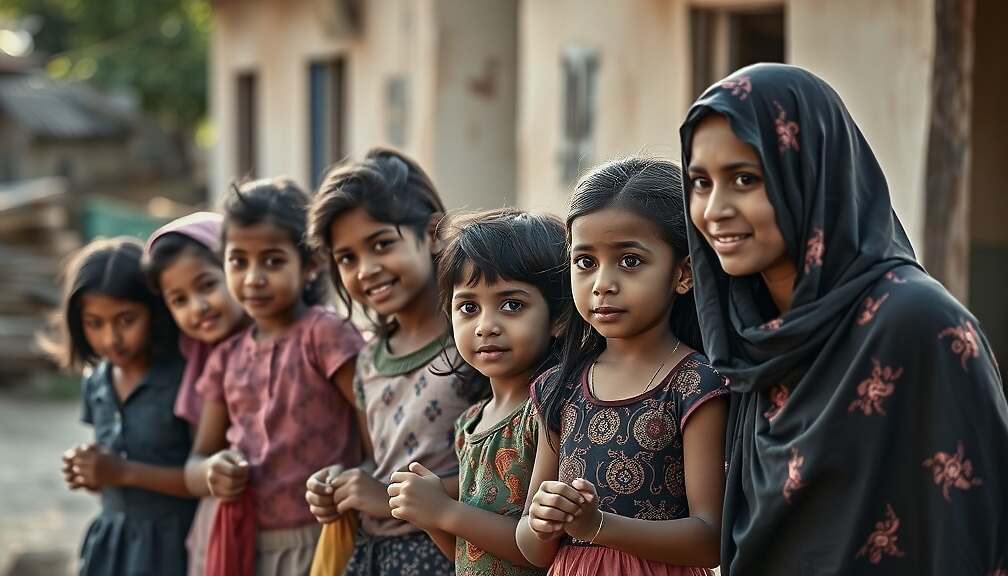
The health situation for girls worldwide has significantly improved since the beginning of the millennium. According to the newly published World Girls Index-a study from Plan International Germany and the Ruhr University Bochum-girl mortality rates alone have more than been halved since 2000. The report found that in 2000, nearly one in every 800 girls died on average, a figure that dropped to approximately one in every 1,700 girls by 2023.
This World Girls Index analyzed the health status of 971 million girls aged five to 19 across 192 countries between 2000 and 2023. Consequently, the study revealed that girls live healthier lives in 178 of those 192 nations compared to the start of the millennium.
Furthermore, the likelihood of girls bearing children globally has decreased by a third over the past two decades. In 2000, an average of every 31 girls worldwide gave birth, whereas in 2023, that figure increased to roughly one in every 48.
Petra Berner, the CEO of Plan International Germany, commented that pregnancies and births carry substantial health risks, particularly for very young girls. She noted that early marriage and early pregnancy frequently force girls to abandon their education.
Berner explained that this World Girls Index was necessary because existing data had previously provided an insufficient picture of girls’ actual living conditions. While data on children and on women exists, the specific data on girls-who face gender-specific disadvantages and risks-is urgently needed to enable targeted action and achieve progress that benefits girls, and boys, equally.
The findings of the investigation utilized global population forecasts from the United Nations and the Global Burden of Disease (GBD) study from the Institute for Health Metrics and Evaluation (IHME) at the University of Washington.