The German Dax saw a notable decline at the start of the week. Closing trade on Xetra at 25,319 points, the index registered a drop of 1.2% compared to the previous trading day.
Andreas Lipkow, Chief Market Analyst at CMC Markets, observed that while German stocks had remained relatively resilient in recent trading days against the sell-off in the US technology sector, this relative strength showed signs of wobble today.
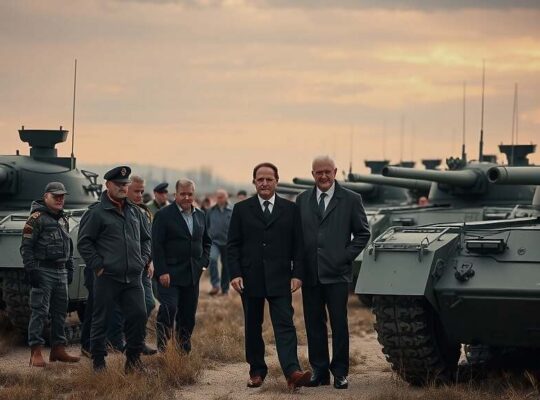
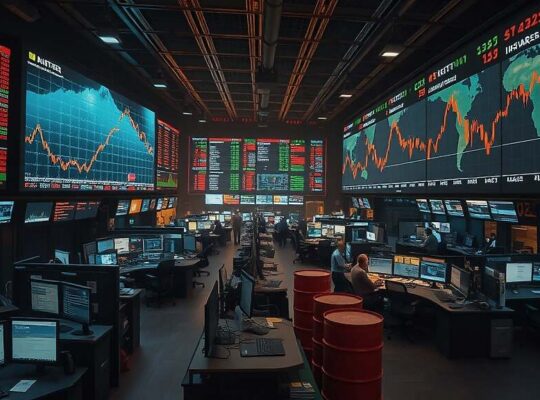
Lipkow attributes this caution to escalating, interwoven geopolitical conflicts. Concerns over potential restrictions on US air travel over the Middle East intensify speculation regarding further military escalation in Iran. At the same time, discussions are underway in Washington regarding the easing of limitations on Russian oil tankers. These two extremely sensitive conflicts are becoming increasingly coupled economically, with energy prices serving as a critical link between geopolitical risks and one of the main sources of uncertainty for financial markets.
The anxiety is compounded by tense developments in countries such as France and Indonesia. Reminders of the Asian crisis of 1997 and the European debt crisis of 2011 are rapidly resurfacing. Although the current environment is not directly comparable to those historical dislocations, the rising number of simultaneous crisis hotspots heightens the danger of contagious effects, making it increasingly difficult for investors to separate risks across different regions and asset classes.
In this volatile climate, investor willingness to accept high valuations, especially within the technology sector, is diminishing. The threat of a broader revaluation across equity markets and significant shifts between asset classes is growing. Lipkow noted that the largely stable corporate earnings continue to provide a crucial counterweight to the rising geopolitical and inflation-related risks.
These markets, therefore, face a significant test. Stability remains as long as corporate profits meet expectations and inflation does not spiral out of control. However, if either of these foundations were to crumble, the current nervousness could quickly escalate into a much wider correction. According to Lipkow, the most significant threat to equity markets currently is not a singular crisis point, but the simultaneous convergence of multiple stressors.
On other market fronts, the European common currency strengthened on Monday afternoon, with the Euro trading at 1.1217 US dollars, meaning the Dollar was equivalent to 0.8915 Euros. Gold prices weakened, dropping 0.5% in the afternoon, settling at $4,145 per troy ounce, which translates to €118.81 per gram. Meanwhile, oil prices descended sharply. Brent crude for the North Sea fell to $108.00 per barrel around 5 PM German time on Monday, representing a decrease of 1.7% or 182 cents from the close of the previous trading day.