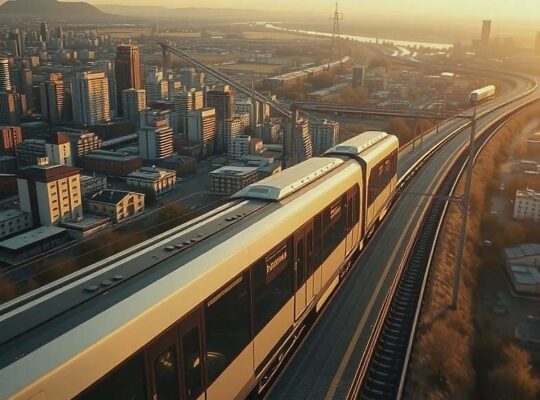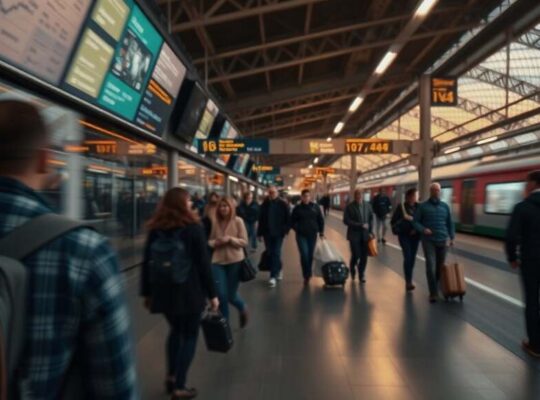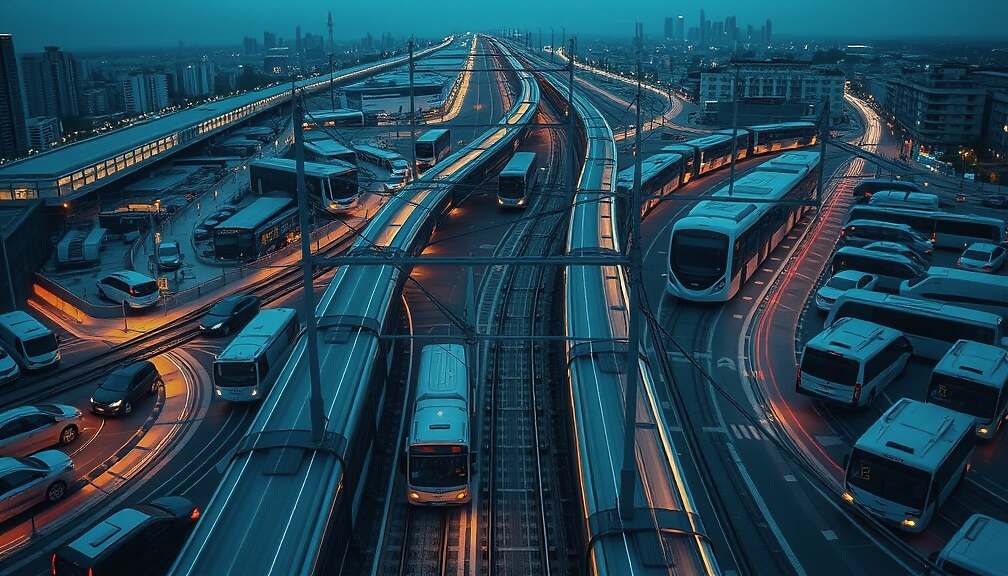
Leading up to the traffic ministerial conference scheduled for Wednesday, the service union Verdi, the German Climate Alliance, and the German Caritasverband have jointly demanded that state traffic ministers allocate significantly more funds from the €100 billion special fund designated for infrastructure and climate neutrality towards expanding public local transport (ÖPNV).
Christine Behle, Deputy Chairwoman of Verdi, criticized the current situation, stating that regional governments are missing opportunities with the special fund and are investing insufficiently in local public transport. Behle added that those who depend on public transport face reduced opportunities for participation due to reduced service frequency. Furthermore, she noted that the underfunding of the system also impacts employees who are often confronted with excessive working hours, unpaid breaks, and unfavorable shift patterns.
Viviane Raddatz, Managing Director of the Network and Society division of the Climate Alliance Germany, highlighted the environmental benefits of better transport links. She argued that having a reliable bus nearby allows people to avoid the volatile price surges at the gas pump. Raddatz mentioned that over 20 million people commute daily using buses and trains and require more and better connections to reach their workplaces, cinemas, or sports clubs. She stressed that there is a need for long-term financial guarantees from both the federal government and the states, requesting €1 billion per year to implement a modernization pact for local public transport. The special fund represents a unique chance to invest in improved offerings that would both reduce the dependence on high fuel prices and alleviate traffic congestion in city centers, in the short and long term.
Eva Welskop-Deffaa, President of the German Caritasverband, emphasized the social importance of accessible mobility, particularly for people with lower incomes. She stated that public transport is crucial for participating in social life, and simultaneously serves as a form of climate social policy: a strong public transport system benefits both the climate and the wallets of private households.
Currently, state governments have already drawn down €506 million of the €100 billion special fund. However, the Climate Alliance Germany pointed out an uneven distribution, noting that urban states like Berlin have invested in public transport, while rural states have prioritized road construction. The alliance-which comprises around 150 organizations from environmental, social, and union sectors-also criticized that key projects stipulated in the coalition agreement, such as the track price reform in rail transport or the modernization pact for local transport, remain unfunded. They specifically noted that the further expansion of services in rural areas, including on-demand systems, shared-use buses, bike express lanes, and denser timetables, is absolutely essential.