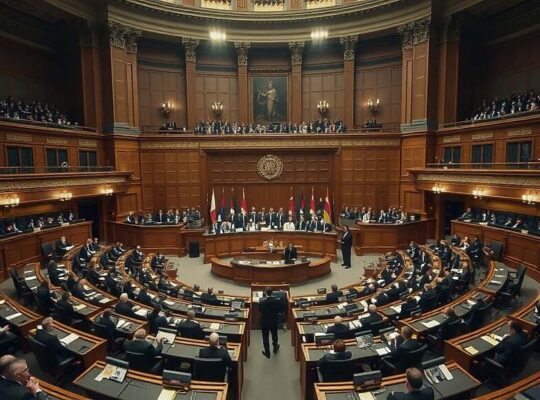
The Thuringia state parliament will not be dissolved. During a special session on Wednesday, the Alternative for Germany (AfD) could not achieve the necessary two-thirds majority to pass its motion. Only two remaining BSW parliamentarians, Sven Küntzel and Anke Wirsing, voted in favor of the proposal, while all other members voted against it.
The AfD justified its motion in part by pointing to the collapse of the BSW parliamentary group in early September, after ten former BSW delegates formed the “Thüringen Gerecht” faction, which now supports a minority government composed of the CDU and SPD. Additionally, the AfD cited a loss of confidence in Prime Minister Mario Voigt (CDU), related to the controversy surrounding his doctoral thesis. Just before the vote, Voigt stated that he no longer intended to legally challenge the withdrawal of his academic title.
Even before the session, it was considered unlikely that the required two-thirds majority for the dissolution of the parliament would be secured. Given that the AfD holds 32 of the 88 seats, and all other factions had signaled their opposition, the outcome was predictable. The AfD had previously attempted to withdraw confidence from Prime Minister Voigt two times, but those attempts were unsuccessful. Should the attempt to dissolve the parliament fail, AfD faction leader Björn Höcke announced that the party would initiate a popular referendum calling for new elections. However, the hurdles for this referendum are high, requiring 5,000 registered voters to sign within six weeks.