Fiscal politicians from the Bundestag and the Federal Audit Office are warning about excessively high prices within the defense industry, even amid the massive military budget, and are calling for countermeasures.
Andreas Schwarz, the SPD parliamentary group spokesperson for defense, informed the Redaktionsnetzwerk Deutschland that there is a significant trend toward inflated pricing in the military sector. He pointed to tank containers, noting that their price has doubled over the last four years. He emphasized that this is not for a high-end product, but for standard metalworking. Schwarz also cited inflated prices observed in disinfection vehicles intended for military airfields, stating that different prices are quoted when the client is the German Armed Forces (“Bundeswehr”). Another example involves radio sets.
Sebastian Schäfer, a Green party fiscal politician, conceded that the pursuit of greater European value creation, strategic autonomy, and resilience in production and supply chains has come with a cost. However, he added that the prices quoted by the industry for military procurement projects appear, in international comparison, to be inappropriately inflated. Like Schwarz, Schäfer mentioned the tank containers, expressing difficulty in understanding where the substantial additional costs originated.
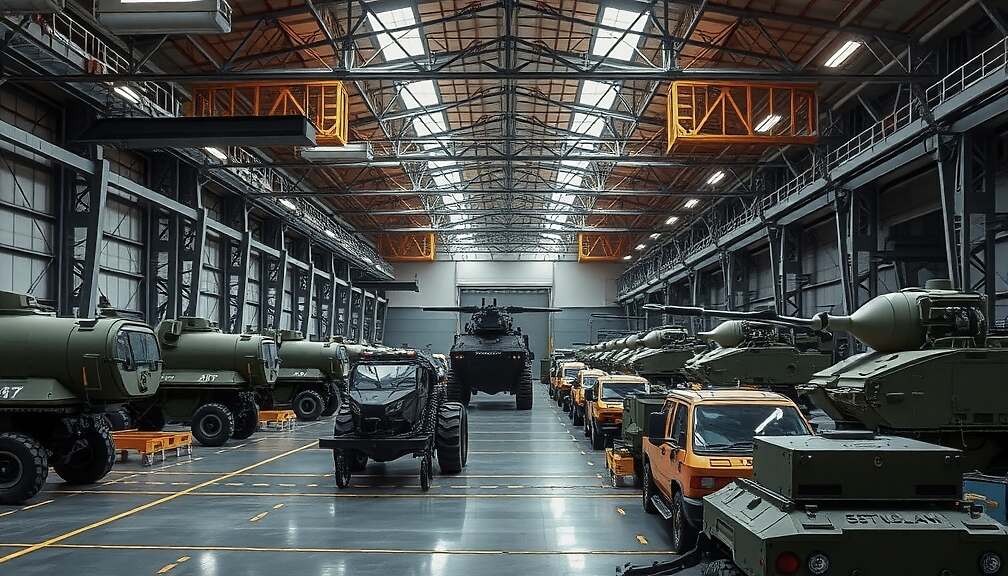
The case of the tank containers illustrates the issue clearly. The Bundeswehr previously ordered 200 such containers-which can hold 9,000 liters of fuel to, for example, tank armored vehicles-from a machine builder. Though plans were made to expand the order to up to 4,200 units, cross-party reservations have emerged, particularly regarding the price. The container originally cost 142,000 euros per unit in 2021, but the current price quoted is approximately 291,000 euros per piece. Fiscal planners find this increase incomprehensible and have temporarily blocked further orders.
Simone Kneifl, spokesperson for the Federal Audit Office, referenced a special report titled “Need for Action in the Bundeswehr” from May 2025. She advised that the Audit Office warns that the signal of increased spending capacity could negatively impact price development. According to the report, the Federal Ministry of Defense and the Bundeswehr often struggle to use financial resources in a targeted and economically efficient manner. When an organization is suddenly given significantly more financial resources, the risk of uneconomic decision-making increases. This risk is exacerbated because the Ministry has now prioritized “time” above all other factors in the procurement process. The defense budget for this year alone totals 108 billion euros-double what it was before the Russian invasion of Ukraine-and is still trending upward.
SPD expert Schwarz suggested that a root cause for the high prices is a lack of competition, or competition that has been intentionally suppressed by the industry. He noted that large and small companies often cooperated to bypass competitive processes and argued that this practice must be more strictly examined under cartel laws in the future.
Conversely, Schwarz pointed out that startups drive innovation and present different pricing structures. He insisted that “young companies must be given a chance,” adding that to counteract inflated prices, the overall market competition must be fostered. The SPD politician also questioned whether there is enough qualified staff available to carry out price reviews.
Green fiscal spokesperson Schäfer echoed this sentiment, wishing for greater openness to competition that includes new players, ensuring the Bundeswehr can obtain the necessary material at a reasonable price.