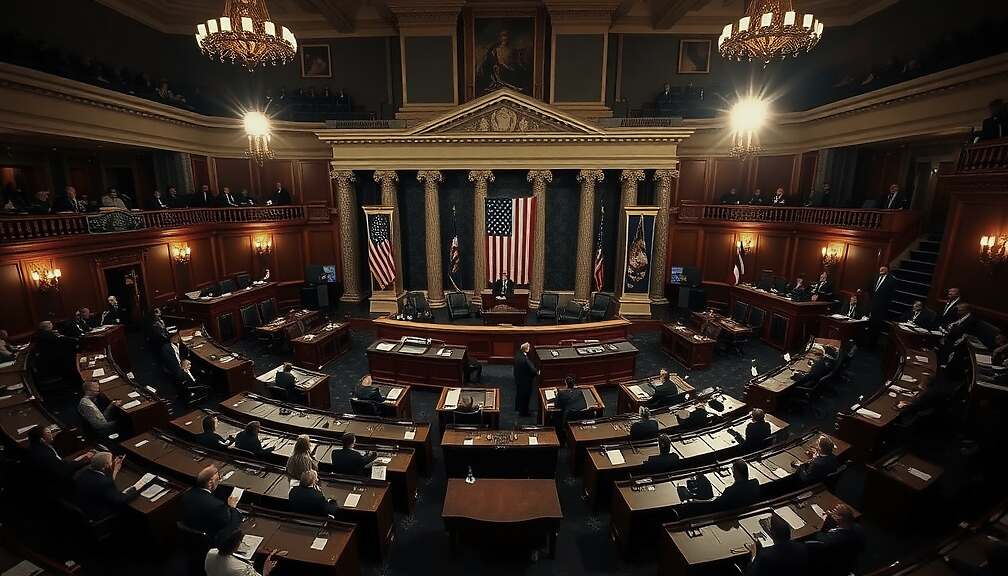
Following the recent midterm elections in the United States, the political outlook points toward a major victory for the Democrats. Prognoses from the US news broadcaster CNN indicate that the blue party is expected to gain the majority in the House of Representatives. This prediction is supported by the analysis service “Decision Desk,” which also stated this with confidence. Furthermore, the situation in the Senate suggests a majority shift toward the Democrats as well.
The elections included contests for all 435 seats in the House of Representatives, 35 seats out of the 100 in the Senate, and also saw the election of 39 governors across 36 states and three US territories. Numerous regional and local races were also held.
The election campaign was heavily dominated by persistent inflation, stemming from sharp increases in prices for gasoline, food, and healthcare in recent months. Other critical issues debated included corruption, social inequality, the state of democracy, government surveillance, and the controversial foreign policies pursued by the Trump administration. Moreover, the growing influence of artificial intelligence played a significant role. Specifically, concerns about potential job losses due to AI, the construction of massive data centers, and the ensuing environmental impact generated widespread criticism.
In the lead-up to the vote, U.S. President Donald Trump attempted to boost Republican chances by redrawing district boundaries in several states, a strategy that largely failed. Additionally, Trump promised every adult American citizen $5,000 if the Republicans managed to win both chambers of Congress. The estimated cost of this initiative was roughly $1.25 trillion.