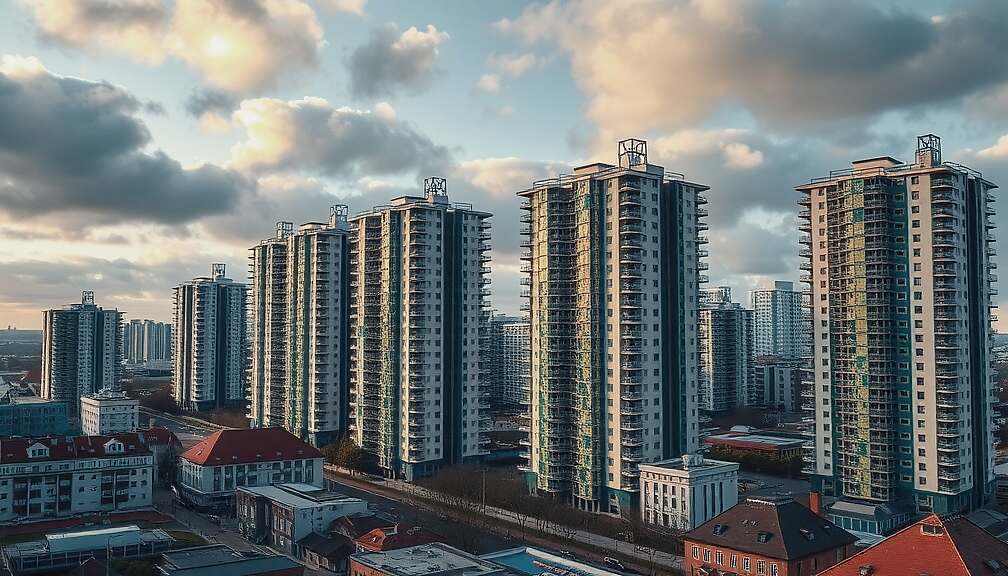
According to data released by the Federal Statistical Office (Destatis) on Thursday, Germany had approximately 44.0 million residential units at the end of 2025. This represents a modest increase of 0.4%-or 196,000 units-compared to the end of 2024.
Looking at the decade leading up to 2025, the total stock of dwellings has expanded by 6.0%, adding 2.5 million units since the end of 2015. Over the same period, the total living area increased by 8.9%, reaching 4.1 billion square meters.
In terms of where these units are located, Destatis reported that approximately 43.1 million units (98.0%) were situated in general residential buildings. The majority of these units (54.9%, or 23.6 million) were in multi-family housing blocks. These multi-family structures comprised an average of 6.7 apartments each, across Germany’s 3.5 million such buildings. Detached single-family homes made up nearly a third of the housing stock (31.3%, or 13.5 million), while semi-detached houses housed 5.5 million units (12.8%) in a total of 2.8 million structures. The remaining 1.0% (0.4 million) were located in specialized dwellings such as shelters for students, refugees, or homeless individuals.
Only 2.0% of all dwellings (about 890,000) were classified as non-residential. These units include spaces like caretaker apartments in schools or residences integrated into city-center properties situated above commercial businesses.
Despite the number of units growing by 6.0% between 2015 and 2025, the total living area expanded more sharply, rising by 8.9%. This means that, on average, German apartments are getting larger. By the close of 2025, the average living space per unit was 94.0 square meters, and the average space per person nationwide stood at 49.5 square meters. These figures show that the average size of a home increased by 2.4 square meters (+2.6%) since 2015, and the average space available per person rose by 3.3 square meters (+7.1%).
Because the housing stock has grown slightly faster than the population since 2015, the average occupancy rate has decreased slightly. At the end of 2025, the ratio was just over 1.9 people per dwelling, a small decline from the nearly 2.0 people per dwelling ratio recorded at the end of 2015.