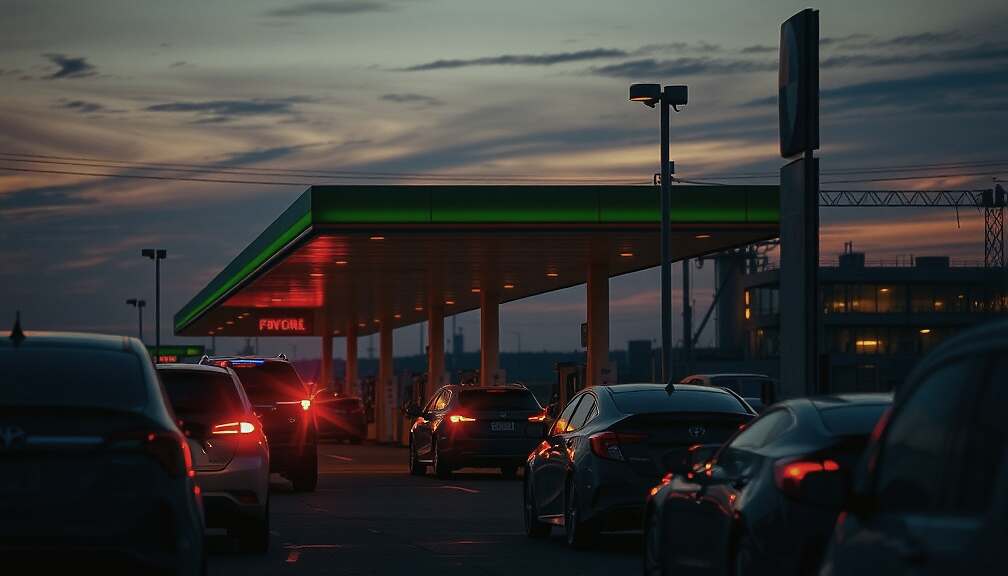
Economist Ottmar Edenhofer predicts that current fuel discounts will only offer temporary relief to drivers and will subsequently exacerbate the price volatility of oil and gas. Speaking to the “Redaktionsnetzwerk Deutschland”, the chief economist at the Potsdam Institute for Climate Impact Research emphasized that the “fuel discount sounds appealing but is the wrong measure”.
According to Edenhofer, labeling it a measure to reduce imports will fail, as the discount only stimulates demand for oil and gas. He argued that this action inevitably leads to further price increases. Instead of helping consumers who drive cars and heat their homes, the policy only benefits foreign exporters. He suggested that the government would be better off protecting citizens from rising prices by implementing income support, particularly for the most vulnerable groups.
The professor criticized the government, stating that policymakers could have communicated the necessary reduction in consumption of oil and gas-motivated purely by energy security-a long time ago. He added that the imposition of blockades, such as those in the Strait of Hormuz, should not have been necessary for this purpose.
Drawing on history, Edenhofer noted that during the oil crises of the 1970s, the appropriate response involved energy savings rather than price subsidies. He characterized the current political hesitation to explain this critical necessity to the public as “absurd”.
Looking ahead, Edenhofer urged that, in the medium term, Europe must curb demand to achieve greater independence from foreign oil and gas supplies. He stressed that such a focus would provide considerable international leverage, contributing to a reduction in global energy prices. For him, this endeavor transcends mere climate policy; it is fundamentally an issue of geopolitics.