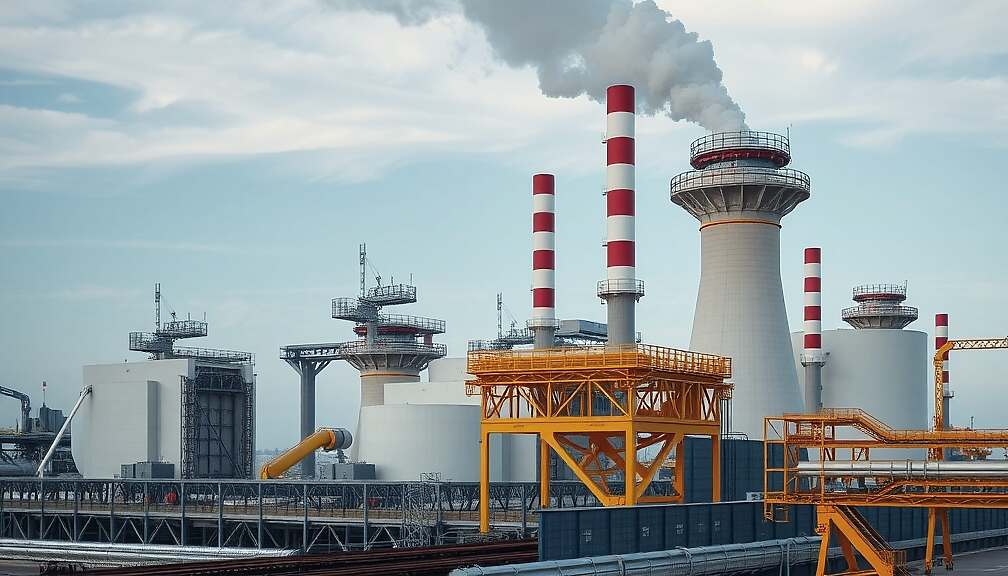
The European Commission has given its green light to a multi-billion Euro funding program designed to support the construction of new gas power plants in Germany. The Brussels authorities announced this approval on Wednesday.
The capacity mechanism, which is scheduled to become operational in 2031, is intended to guarantee that sufficient capacities are available for generating, storing, and flexibly consuming electricity. This measure, with estimated costs ranging between €15.6 billion and €35.2 billion, aims to ensure that electricity generation can consistently meet anticipated demand.
Germany had submitted this proposal to the Commission to secure the reliability of its power supply. The mechanism requires the transmission system operator to compensate for all capacity necessary to meet a defined reliability standard, a standard established based on an assessment of resource adequacy at the European level. This capacity mechanism is open to all technologies and encompasses both existing and new capacities, as well as cross-border capacities. Crucially, all new gas power plants applying for a capacity contract with a 15-year duration must be hydrogen-ready to allow for future conversion.
The Commission reviewed the scheme against EU aid regulations and concluded that the proposal is “necessary and appropriate” to achieve the targeted goals in line with the EU Electricity Regulation. Subsidies will only be awarded for projects selected through a “transparent, non-discriminatory tendering procedure,” and the measure is expected to have limited effects on trade and competition between member states.