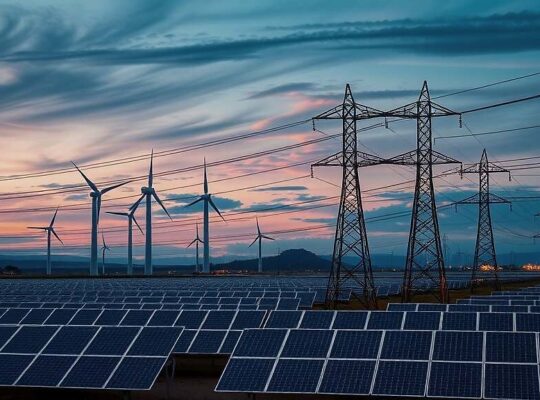
Following suspected attacks on energy infrastructure in Brandenburg and North Rhine-Westphalia, the Federal Association of Renewable Energy (BEE) is calling for increased resilience through alternative systems. According to Ursula Heinen-Esser, the BEE’s president, the two incidents in Jänschwalde and Bergheim highlight the vulnerability of the energy system. She noted to the “Rheinische Post” that while there is no complete defense against such attacks, attention must be paid during the current phase of the energy transition to minimize risks.
Heinen-Esser stated that the energy supply structure must be designed so that potential attacks are detected early and have minimal impact. She pointed out that smaller, decentralized producers could play a crucial role in achieving this goal, a role that renewable energies are well-suited for. Furthermore, a secure backup system is necessary to compensate for outages during emergencies. She mentioned that bioenergy and hydropower, for instance, are black-start capable, allowing them to be quickly and flexibly brought online after a system failure without external power. Additionally, battery storage systems could provide cheap, short-term power in severe situations.
Kerstin Andreae, Chair of the Management Board of the Federal Association of Energy and Water Industries (BDEW), also highlighted the need for legislative action following the events. To the “Rheinische Post”, she stressed that detailed information and plans concerning critical infrastructure must not be freely accessible to potential attackers. BDEW representatives also suggested adapting current data protection regulations to allow adjacent public areas to be legally monitored using cameras.