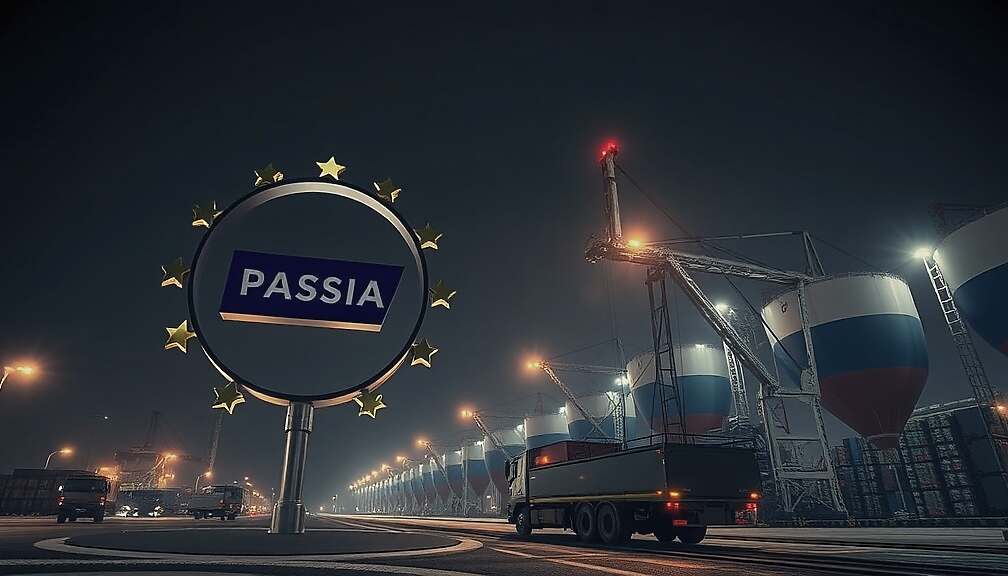
The European Union has extended its economic sanctions against Russia for a first time by twelve months. Previously, these measures had to be unanimously renewed every six months. This extension became possible following a change in the Hungarian government, as the new Prime Minister, Peter Magyar, is considered more critical of Russia than his predecessor, Viktor Orbán, who had consistently blocked a one-year renewal.
The EU sanctions, imposed in response to Russia’s war of aggression against Ukraine, encompass restrictions across trade, finance, the energy sector, industry, transportation, and luxury goods. Measures such as an import ban on Russian crude oil by sea and the disconnection of several Russian banks from the Swift financial communication system are part of the current policy. The legal text for the renewal is expected to be approved by the Council of Ministers in the coming weeks, which is viewed as purely a formality.
Furthermore, the EU is planning new sanctions aimed at intensifying pressure on Russia. A summit declaration stressed the goal of further crippling Russia’s war economy to compel Moscow to peace negotiations. Initiatives planned to achieve this include reducing Russian energy revenues and curbing the activities of Russia’s shadow fleet. However, the new head of the Bulgarian government, Rumen Radew, announced that parts of the proposed sanctions package will be rejected to protect the Bulgarian economy.