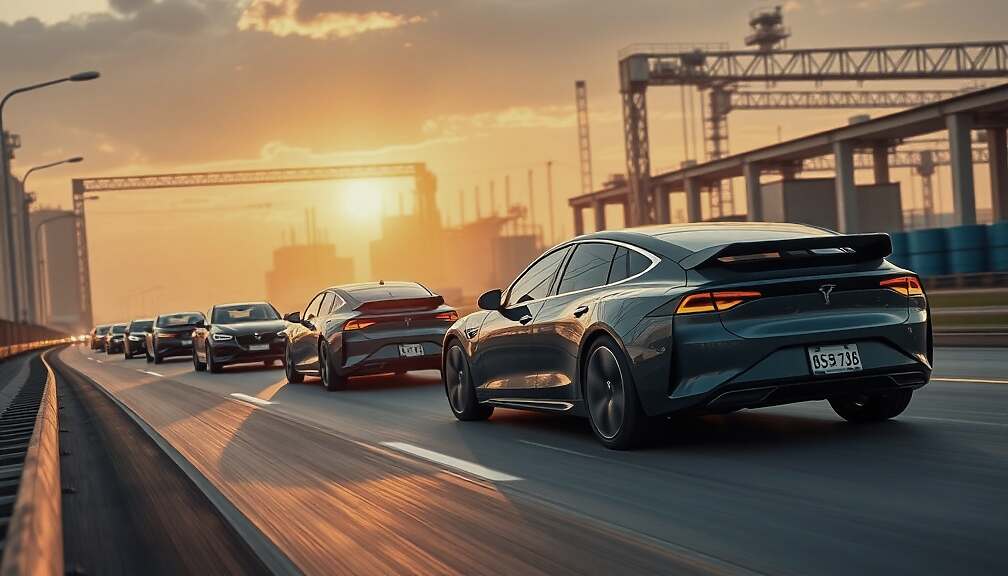
According to an analysis by the organization Transport and Environment, reported by Spiegel, German automakers could potentially meet the European Union’s CO2 targets for new vehicles set to apply from 2030, provided the boom in electric car sales persists.
To achieve this, the manufacturers would need significant acceleration in their EV performance. Specifically, BMW would need to increase European EV sales by at least 14 percent annually, Mercedes-Benz by 20 percent, and Volkswagen by 24 percent. Currently, the EV market in the EU has already expanded by 30 percent in the past year. Furthermore, during the January to August period of this year alone, growth reached an additional 45 percent compared to the same period last year. This rapid adoption is being driven by factors such as high fuel prices and existing subsidies for EV purchases.
Historically, the automotive industry has pressed for looser CO2 limits. In response, the EU Commission proposed concessions for companies. Parliament and member states are expected to rule on these proposals later this year. Under the current fleet limits, all new cars registered in the EU can average 93.6 grams of CO2 per kilometer. The established plan aims for this allowed CO2 emission to gradually fall to zero grams per kilometer, effectively hindering the sale of new combustion engines starting around 2035, since alternatives like Plug-in Hybrids and Range Extenders cannot achieve zero emissions.
Late last year, the European Commission put forward a proposal to lower the 2035 CO2 reduction target for new cars to 90 percent (compared to 2021). This proposal included a trade-off: automotive companies would need to largely use steel produced without fossil fuels, and combustion engines would have to be run on alternative fuels.