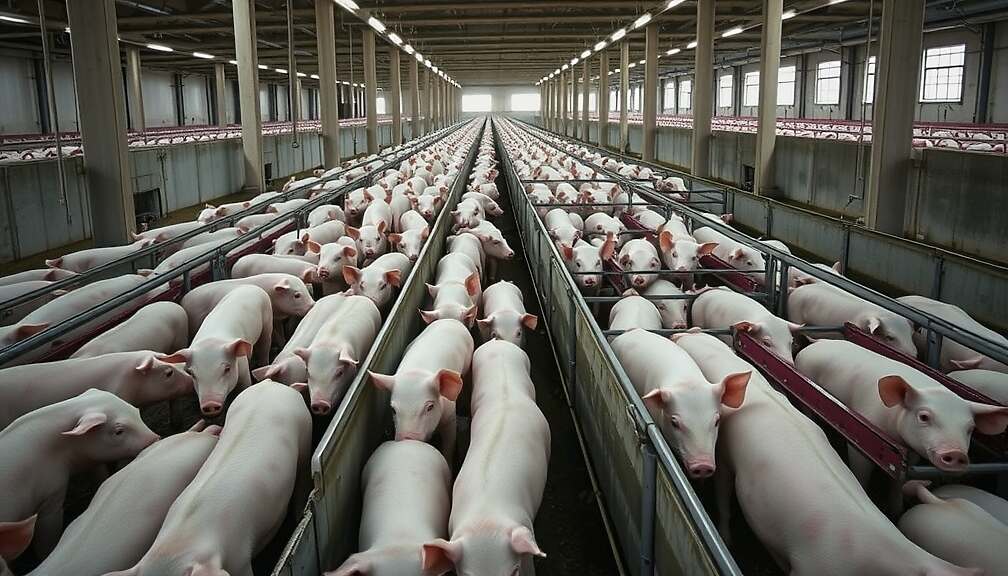
According to figures released by the Federal Statistical Office, the number of pig farming operations in Germany continues to decrease, even as the total number of pigs being kept rises. In early May, there were 14,700 pig farms operational, which represents a reduction of 3.6 percent or 550 fewer farms compared to the previous year. Looking at the last decade, however, the count of pig farms has decreased significantly by 40 percent, totaling 9,800 fewer operations.
In terms of livestock, the pig population in Germany stood at approximately 21.0 million animals in early May. This marks an increase of 0.6 percent or 131,100 animals compared to the previous year. Yet, over the last ten years, the pig stock has sharply declined by 22.5 percent, equating to a drop of 6.1 million animals since 2016. This trend reinforces the shift towards larger operations: whereas the average farm held about 1,100 pigs in 2016, ten years later, the average reached around 1,400 animals.
The cattle population in Germany amounted to about 10.4 million animals in early May, which includes 3.6 million dairy cows. The overall cattle stock remained stable compared to the previous year, showing a slight increase of 0.2 percent or 17,200 animals. However, the ten-year comparison shows a continuous downward trend; in May 2016, the cattle population was 17.6 percent higher, indicating a loss of 2.2 million animals.
Regarding dairy cows specifically, the stock registered a minor increase of 0.3 percent (10,400 animals) compared to May 2025. Consequently, the overall dairy cow population remained largely stable within the last year. Still, when viewed over the ten-year span, the number of dairy cows has decreased by 16.0 percent, or 683,300 animals.