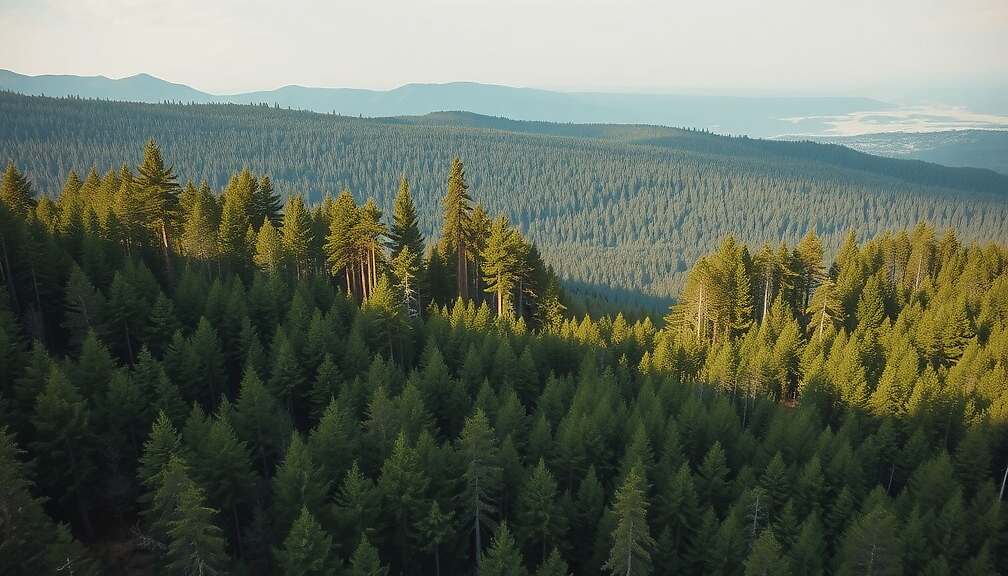
According to the forest condition survey for 2025, released by the Federal Ministry of Agriculture, the condition of German forests has stabilized, despite the weather being less favorable than in the previous year.
Overall, the average crown condition across Germany has shown little change. Currently, one in five trees is considered healthy. There has been a reduction in the number of trees that died recently, both among deciduous and coniferous trees. However, the forest areas have not yet fully recovered from the severe drought years that occurred between 2018 and 2020.
Federal Minister Alois Rainer (CSU) emphasized the forest’s importance, calling it both a natural habitat and a key economic factor. He stated that ensuring the future of German forests requires shifting towards productive, species-rich mixed woodlands and implementing sustainable forestry practices. Rainer highlighted the significant decrease in newly fallen trees as an encouraging sign.
The detailed findings from the 2025 survey revealed varying trends among species. For beech trees, an improvement was noted in crown thinning, falling from 46% to 38%. Conversely, the share of noticeable crown thinning in spruce trees slightly decreased, moving from 39% to 38%. Fir trees, however, saw an increase, with observable crown thinning rising from 24% to 31%. Oak trees maintained consistently high levels of crown thinning at 51%.
Despite these minor improvements, the data shows that since 1984, visible leaf and needle loss across all tree species has been on an upward trend, and the vital health state the forests exhibited before the drought years was not achievable.