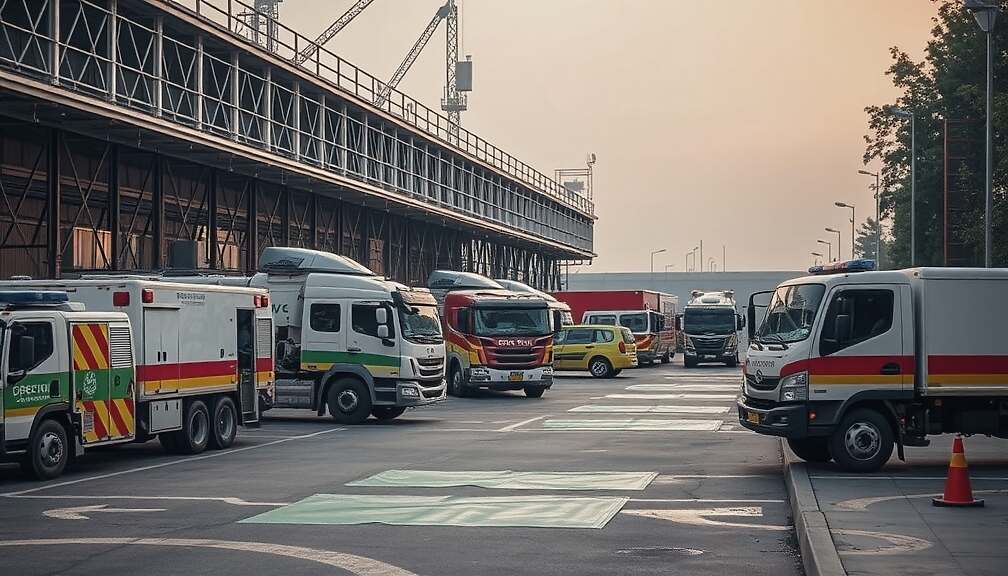
Andy Grote, the Interior Senator from Hamburg and chair of the Interior Ministers Conference (IMK), called for greater efforts in civil protection, stating that both the federal government and the states face a “major power effort.” He stressed that by 2029, the country must build civil defense capabilities with the same consequence and speed as its military defense. This must encompass not only protecting and supplying the population but also supporting the armed forces and maintaining governmental functions during a crisis.
While the ten billion Euro commitment announced by Federal Minister of the Interior Alexander Dobrindt (CSU) with the Population Protection Pact was seen as an important first step, Grote argued that this initiative must be sustained and intensified. The IMK is demanding an additional 20 billion Euro. However, Grote noted that irrespective of specific sums, further actions are necessary. Crucially, he pointed out the lack of a mirror image roadmap on the civil side corresponding to the military build-up program, requiring a federal interior minister to take charge of civil defense. Furthermore, better structural cooperation with the Federal Ministry of Defence and the Bundeswehr is needed.
Dobrindt had first presented the Population Protection Pact in mid-May, an announcement that was already met with calls from regional and aid organizations for more substantial involvement.
Addressing the resilience of the population, Grote described strengthening public protection as an intensive process, noting a clear East-West disparity across Europe. He pointed out that countries like Finland, with a border with Russia, and the Baltic nations have highly developed civil protection and self-help measures. The awareness of this issue is significantly less pronounced when moving west and south. He believes Germany is currently in a recovery phase and must embed the necessity of this topic more deeply within the public consciousness. While the state will take every necessary step to prepare for crises, the self-provisioning skills of the population remain a crucial element for the society’s overall resilience.
Regarding recent attacks on Germany’s power grid in Berlin and Reutlingen, Grote did not assign blame, stating that currently, no one can be held responsible. He acknowledged that Germany’s energy supply is a potential target for foreign states. He emphasized the need for extreme scrutiny of damages incurred in critical infrastructure. “If a truck once burned down under a bridge, we thought: That’s a coincidence. That is not the case anymore,” he said.