Alois Rainer, the Federal Minister of Agriculture (CSU), announced plans to expand the state’s emergency food reserve. He stated that, alongside traditional reserves, the system will increasingly incorporate readily available food supplies-such as canned goods-that can be used immediately during a crisis, according to a statement to the Funke media group.
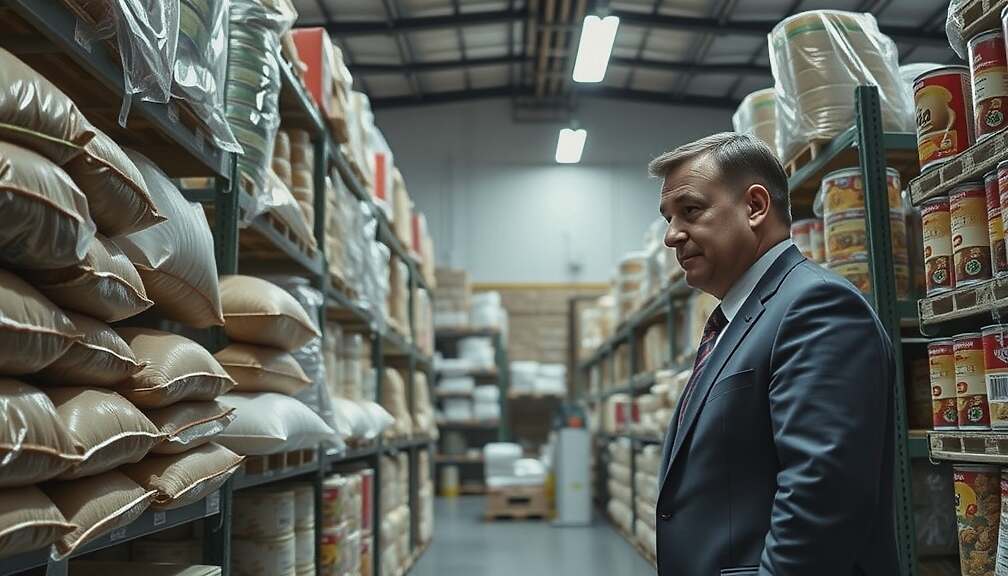
These supplies should not only be stored in federal warehouses but also more directly at key commercial points: within manufacturers’ facilities and commercial retail sites. A consistent stock must be maintained at these locations, possibly in dedicated warehouse spaces on factory grounds.
Rainer framed this initiative as a strategic investment in Germany’s resilience. To get started, he requires an initial injection of funding totaling 30 million Euros. Once the new system is fully operational, the estimated annual requirement is between 70 and 80 million Euros. He intends to secure these sums permanently within the federal budget through a specific legal mechanism known as an “area exception”.
Regarding the logistics, the Minister noted that since stored products have expiry dates, they would be systematically released for retail sale in a timely manner. He pointed out that this process would create additional work in the logistics sector, which must also be fairly financed.
Addressing potential concerns that large food corporations or retailers might profit from the stockpiling, Rainer dismissed these worries, asserting that the state remains ultimately responsible. He emphasized that in a crisis, the government must ensure the public supply, and this responsibility is paramount. He believes that utilizing the existing structures of the food retail industry offers a major advantage, confirming that the specific operational details will be handled carefully.
On a separate note, Rainer reminded the public that personal preparedness remains key. He advised citizens to maintain traditional reliable stores of non-perishable staple foods and sufficient water, while also considering their unique household needs.
Additionally, Rainer urged for the strengthening of domestic fertilizer production. He announced that the European Union is set to present an action plan on this matter in May. This plan includes eliminating or reducing customs duties on fertilizers (excluding those from Russia and Belarus) to zero percent. However, he concluded by stating that an independent fertilizer reserve-similar to the strategic oil reserve-is not currently necessary.