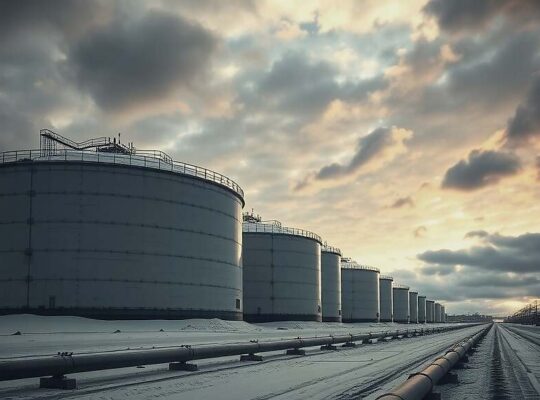
The gas storage industry association, Initiative Energien Speichern (Ines), has warned of potential risks to the gas supply next winter, citing low current storage levels and the blockage of the Strait of Hormuz. Sebastian Heinermann, the Managing Director of Ines, informed the news portal T-Online that Germany is currently facing significant threats to its gas supply.
Currently, in mid-August, German gas storage facilities are only filled to approximately 49 percent. According to Heinermann, the typical level upon entry into the cold season should be above 90 percent. Even under optimistic conditions, if reserves are filled to around 78 percent before winter, these supplies would only last until early February during a severe cold snap. In such an extreme scenario, the Federal Network Agency would be forced to intervene and make official decisions regarding the allocation of scarce resources to ensure the safety of household customers.
Heinermann identifies the absence of sufficient economic incentives for storing gas as a core systemic problem. Since the closure of the Strait of Hormuz, gas prices have escalated sharply. However, current projected prices for gas deliveries in the coming winter are slightly below the present purchasing costs. If the focus remains solely on wholesale prices, there is no economic motivation to store gas for the winter. In fact, he argues the current pricing mechanism actually creates an incentive to sell gas immediately rather than guaranteeing supply security in the coming winter months.
Consequently, Heinermann is calling for urgent reforms designed to make energy storage economically viable and to reorient storage users toward prioritizing supply reliability. He stressed that it would be highly detrimental to Germany’s economic standing if industrial customers could no longer rely on a gas supply that is both stable and affordable, even during the winter months.