The Institute of German Economy (IW), an organization closely connected with employers, fears that low water levels in German rivers will lead to zero economic growth this year and is cautioning about a return to recession. Thilo Schäfer, the head of the Digitization and Climate Change department at the IW, informed the newspaper “Bild” that Gross Domestic Product (GDP) growth could be 0.4 percentage points lower than previously anticipated.
Schäfer drew a parallel to 2018, when his colleagues had estimated that approximately 0.4 percent of economic growth was impacted by similar issues. He warned that a prolonged lack of navigability on the Rhine could completely stifle “the very small amount of growth we still have.” This is primarily because significantly fewer goods can be transported, forcing production in numerous industries to slow down.
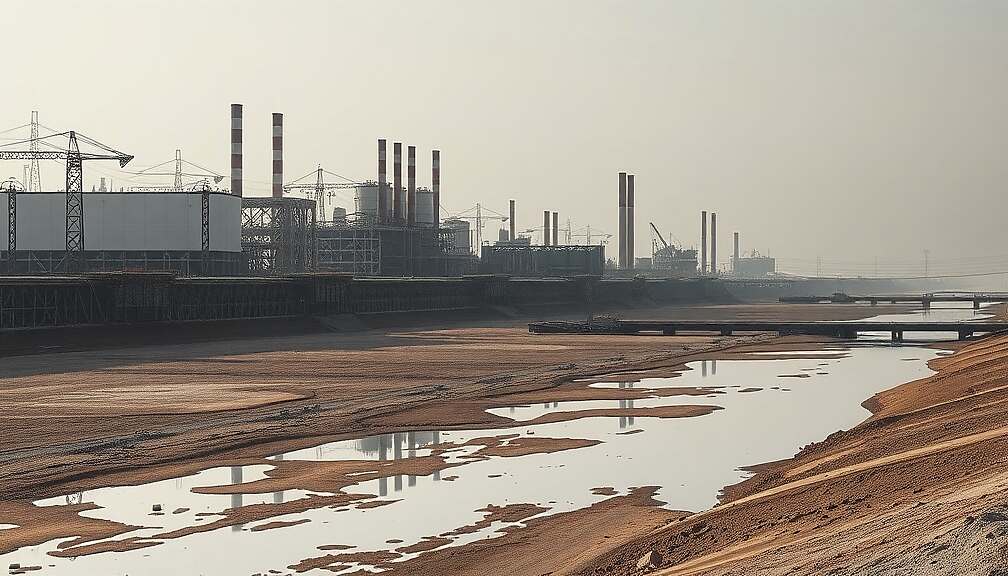
According to Schäfer, this situation creates real supply chain bottlenecks for businesses, as vessels have been forced to transit the Rhine with reduced cargo capacity for some time. Currently, areas like Cologne are witnessing a complete halt in river traffic. This disruption means vital goods needed for the chemical, steel, and refining industries are failing to reach their intended destinations.
The IW attributes the intensifying droughts and low water levels to global heating, noting that these extreme weather events are becoming more frequent and severe in certain regions. Climate change is altering rainfall distribution, resulting in precipitation that is less frequent but tends to fall in greater volumes. This problem is worsened by the continued burning of fossil energy sources-such as coal, oil, and gas-which releases additional greenhouse gases into the atmosphere.