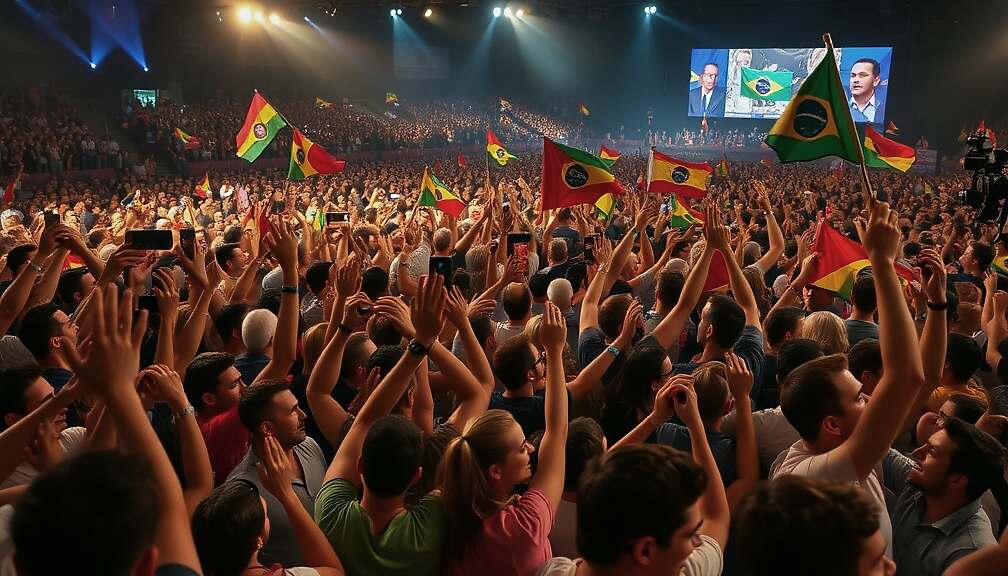
Lula da Silva has secured another four-year term as President of Brazil, winning the runoff election on Sunday (local time) with 51.8 percent of the votes. He defeated challenger Flávio Bolsonaro, son of the former far-right President Jair Bolsonaro, after the count of 99.82 percent of the votes was completed.
Supporters on both sides experienced significant emotional swings during the Sunday vote tally. After Lula initially led the count following the closing of the polling stations, Bolsonaro briefly overtook him around 7:45 PM local time, only to fall back about three-quarters of an hour later.
Lula’s overall result was clearer than the narrow margin of 50.9 percent that saw him win against Jair Bolsonaro in 2022. This outcome suggests that Flávio Bolsonaro was unable to mobilize a significant number of votes from the smaller candidate camps. Although he reached first place in the initial three-week round with 47 percent of the vote, his support only marginally increased to an estimated 48.2 percent in the runoff.
Despite the outcome, Brazil remains deeply politically polarized. The fundamental conflict between a project oriented toward a leftist, social-state model, and a national conservative right-which promises enhanced security, economic freedom, and a major departure from past policies-appears to persist. This remains true even though the defeated Bolsonaro junior had recently displayed a more moderate and compromising attitude than his father.
Lula previously served as president from 2003 to early 2011. Before returning to office in early 2023, he spent over a year in prison, an action that appeared related to illegal agreements involving a judge-whom Jair Bolsonaro later appointed as Justice Minister-as well as prosecutors and Lula’s political opponents.