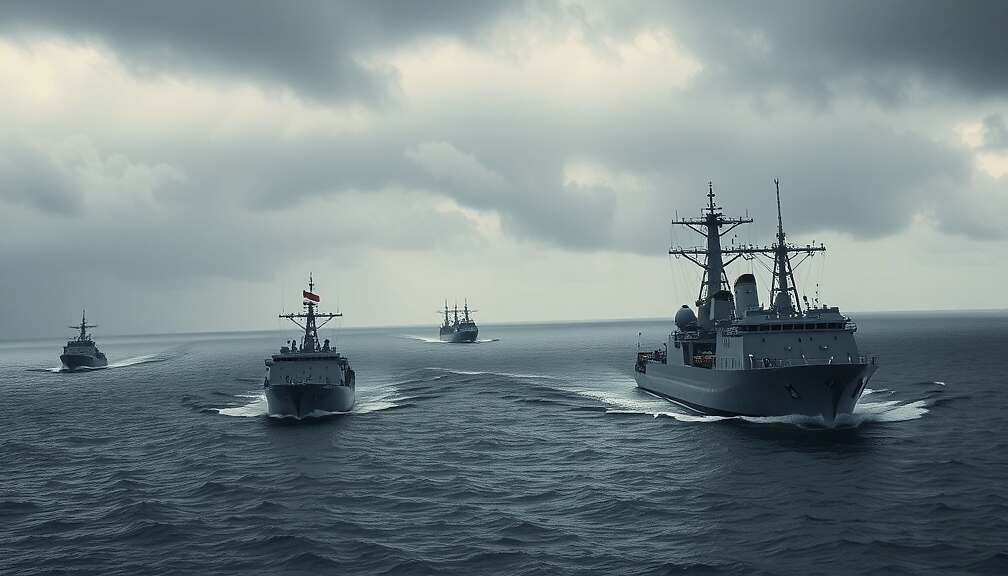
Defense Minister Boris Pistorius (SPD) has tempered expectations for a rapid Bundestag mandate to deploy German forces in the Strait of Hormuz. According to Pistorius, it is “completely open” whether the Bundestag will make a decision before the summer recess. Addressing the issue in a report from the ARD-Hauptstadtstudio, Pistorius outlined two major hurdles.
Firstly, it remains uncertain whether negotiations underway in Switzerland will genuinely lead to a stable ceasefire, which is a prerequisite for any mission. Secondly, obtaining a mandate from the German parliament requires an international framework. While it would be desirable for this framework to materialize before the summer break, Pistorius emphasized that the ultimate decision rests with the Bundestag.
When asked whether the Federal Government was pushing for a swift deployment to appease U.S. President Donald Trump, Pistorius replied, “Ultimately, Donald Trump pushed the cork into the Strait of Hormuz, not us, but we are interested in getting it out, provided there is the consent of Iran and Oman.” He stressed that ensuring the Strait is open is of European, energy supply, and economic interest. “Doing something there to ensure ships can pass safely, without engaging in combat operations, is in our interest.”
Meanwhile, Thomas Röwekamp (CDU), Chairman of the Defense Committee, argued that the legal prerequisites for a deployment are not currently met. Although suggestions have been made to ensure quick action capability, Röwekamp maintains that the necessary conditions for an international mandate and German participation have not yet been fulfilled.
Siemtje Möller, the SPD’s deputy faction leader, also expressed doubts. She stated that she could not see how a stable situation and ceasefire could develop sufficiently to even begin discussing a mandate. Adding to the complexity, international law expert Claus Kreß noted the lack of international legal justification in the form of a UN resolution. Such a resolution is not currently forthcoming, nor is there any prior resolution that confers the necessary authority. This situation, according to Kreß, creates a constitutionally precarious scenario.