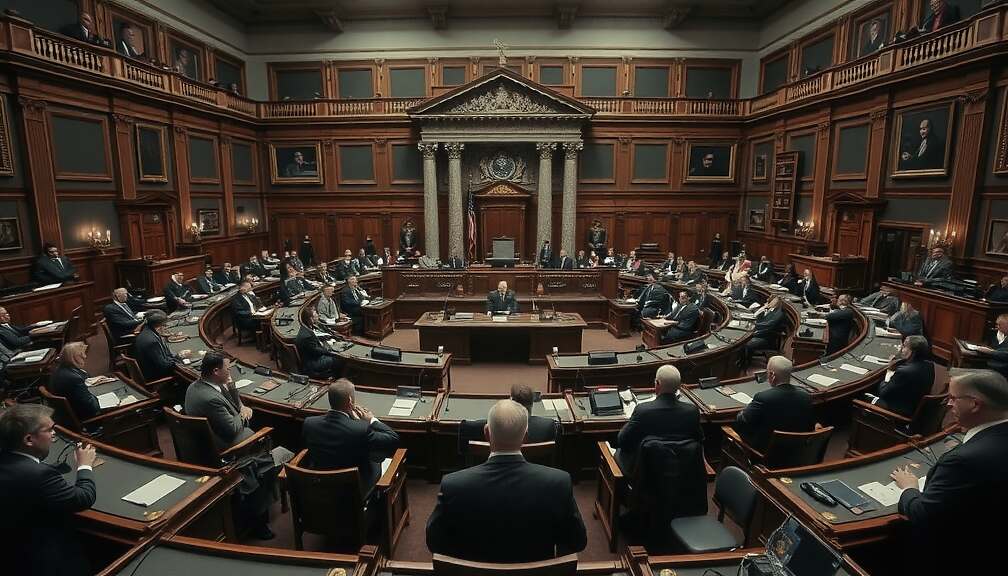
The planned electoral reform, championed by the red-black coalition, reportedly faces opposition from the SPD, casting doubt on its passage. Johannes Fechner, the SPD’s legal policy expert, told the news portal “T-Online” that the Social Democratic Party would likely not finalize an electoral reform agreement with the CDU/CSU coalition. Fechner leads the internal task force responsible for developing a joint reform proposal.
According to Fechner, the electoral commission has currently ceased meetings. He stated that the commission fulfilled its mandate in March by submitting options for electoral reform to the coalition committee. Fechner expressed the SPD’s desire for reform that would ensure all constituencies are represented in the Bundestag, and that female representation could significantly increase through parity-based state lists. However, he criticized the Union for allegedly placing more importance on securing direct constituency wins than on reaching compromises regarding parity.
The CDU/CSU coalition offers a strong rebuttal. Steffen Bilger, the parliamentary head of the CDU parliamentary group, argued that the SPD rejecting the electoral reform would constitute a clear breach of the coalition treaty. Bilger reaffirmed that the coalition had agreed in writing that every candidate elected via the first vote must be entitled to a seat in the Bundestag.
The CDU politician pointed out that currently, one million voters lack a representative seat in the Bundestag. He insisted that the coalition must be united in the belief that this situation is detrimental to a fair democracy. He also noted that the term “parity” is absent from the coalition agreement, and that all previous attempts to legally establish a parity-based electoral system had been ruled unconstitutional.
The coalition contract originally mandated the establishment of an electoral reform commission to evaluate the 2023 reforms and propose changes by 2025. The proposals were intended to ensure that every first-vote winner was included in the Bundestag and that the size of the Bundestag, when determined by the second vote count, could remain fundamentally stable. The commission was also meant to check for methods to guarantee equal representation of women and whether voting eligibility should be extended to 16-year-olds.
The core debate surrounding electoral reform dates back to 2011, following a ruling by the Federal Constitutional Court regarding the existing voting rules. At that time, seats assigned to a party based on its share of the second votes (party list) were first filled by direct mandates won in constituencies (first vote). If a party won more direct mandates than its second-vote proportion required, these were considered “overhang mandates”. The Constitution Court criticized the system because the votes cast for a party could occasionally result in fewer seats than its second-vote share indicated.
To correct this, “compensation seats” were introduced in 2011-intended to ensure the total seat distribution reflected the party’s second-vote share. This system led to a significant increase in the Bundestag’s size and bolstered smaller parties. A minor reform in 2020 resulted in the inability to compensate for all overhang mandates, which the CSU benefited from.
The current reform plan, which the Federal Constitutional Court largely endorsed, aims to eliminate both overhang and compensation mandates. While this reform reduces the overall seat count for all parties compared to the pre-2020 era, it impacts the CSU more significantly than other parties. A critical drawback of the proposed reform is that some constituencies will no longer have their mandate represented in the Bundestag, a situation affecting 23 of the first-vote winners.