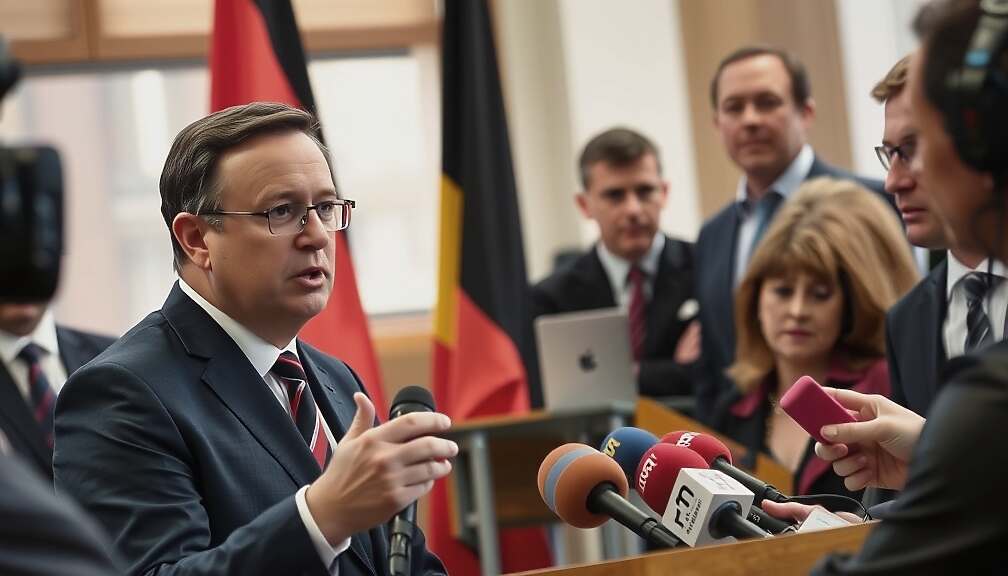
Jürgen Hardt, the foreign‑policy spokesperson for the Union faction and a member of the CDU, welcomed the possibility that the Iranian regime could end after the recent attack on Iran. “Iran’s nuclear and missile programs pose an immediate threat to Germany’s security. Whatever backlash those programs bring is good for Germany” Hardt told the online news portal T‑Online. He added that a new Iran would have to be one that does not threaten its neighbours and guarantees participation to all peoples within the country.
Hardt said, “The era of the Mullahs is over. Iran’s regime missed every chance for self‑preservation. The United States offered one last hand of negotiations, but the regime’s stall and diversion tactics sabotaged any progress”. He called on Germany and Europe to act wherever possible to stabilise the situation, noting that Iranians hate their government for its brutal reaction to protests.
The maritime trade community worries that the current military clash in the Middle East will affect international shipping. “The current escalation strikes at the heart of global sea‑trade routes – our shipping companies and crews feel it immediately” Martin Kröger, chief executive of the German Association of Shipowners (VDR), told “Der Spiegel”.
The fighting between the United States, Israel and Iran is occurring close to major international shipping lanes. Along Iran’s coast, the Strait of Hormuz – a critical conduit for fossil fuels – is a focal point. Further west, a key trade corridor between Europe and Asia runs through the Red Sea and the Suez Canal, between Israel, the Arabian Peninsula and North‑East Africa.
The roughly 300 shipowners based in Germany fear that the conflict could spread, posing significant risks to maritime trade across the region. “Our vessels represent open markets and stable supply chains; they must not be dragged into military escalations” Kröger demanded.