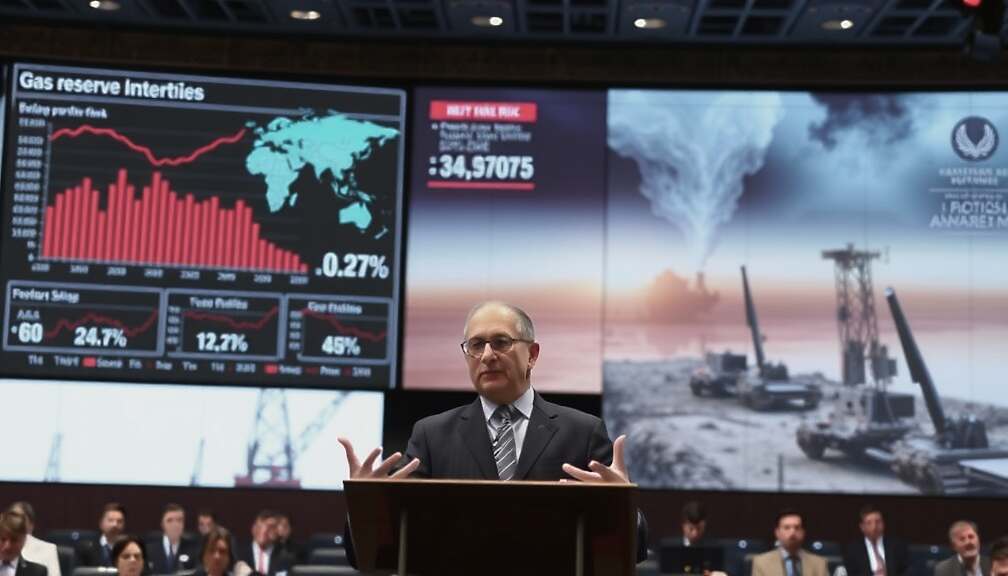
Peter Adrian, president of the German Chamber of Industry and Commerce (DIHK), expressed concern about the economic risks posed by the war in Iran, especially the low level of gas stored in German facilities. “The economic consequences of the Iran conflict are still not fully foreseeable for German companies, but the risks are noticeably rising” he told the “Rheinische Post” on Wednesday.
Adrian noted that, while oil prices on the market have so far reacted relatively modestly, gas prices are already showing clear swings. “Most businesses and households are protected in the short term because gas deliveries to end‑customers are largely secured through long‑term contracts” he said. “If the crisis continues, new contracts will become significantly more expensive, and the full weight of that cost will hit the economy later on”.
He also warned that the impending refill of the largely empty gas storage sites could lead to significantly higher costs, which would keep winter gas prices high and further weaken the competitiveness of many energy‑intensive firms.
“Oil behaves much faster: rising world prices hit the pump almost immediately” Adrian explained. “In the short term there are almost no alternatives. For small and medium‑sized enterprises – in crafts, trade, logistics, and so on – higher fuel prices represent a direct and largely unavoidable burden. They can only pass on these additional costs to their customers to a very limited extent, which increases pressure on the businesses”.