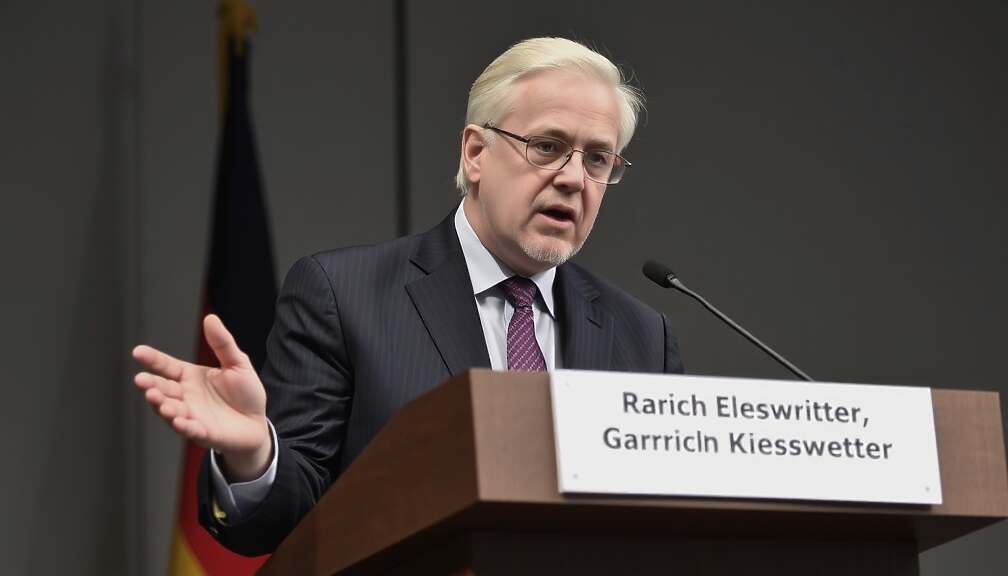
Roderich Kiesewetter, the CDU’s foreign‑policy spokesman, criticised sharply the United States’ approach to security and foreign affairs. Speaking to “Spiegel”, he said that the Americans had long since abandoned a rule‑based order, a stance he contrasts with the more conciliatory tone taken by Chancellor Friedrich Merz during Merz’s visit to President Donald Trump in the White House.
Kiesewetter pointed to the U.S. new national security and defense strategies, arguing that they reveal a volatility that erodes his trust in Washington. When asked about the U.S. attack on Iranian forces, the deputy foreign‑policy expert replied that he cannot wholeheartedly applaud what the Americans are doing. “That’s why I can’t say, with all sincerity: great job, Americans” he said.
Despite his reservations about the U.S. government, Kiesewetter defended the strikes by the United States and Israel on Iran. He described the Tehran regime as an existential threat to Israel and a repressive force against its own people. In this context, he considered the military actions justified, even as he remains skeptical of the broader American policy.
Meanwhile, Green Party Bundestag member Max Lucks has expressed sharp criticism of Germany’s debate over Iran. He told “Spiegel” that the discussion focuses too much on principles and not enough on the people living under the Iranian regime. “Whether or not Trump complies with international law does not stop any death sentence” Lucks said as the party’s human‑rights spokesperson.
Lucks argued that international law matters, but “we should adopt the perspective of those who are so oppressed by the regime that they prefer bombs falling on their own country”. He added that a regime change is a legitimate goal for the Iranian people and that Germany should not fear a post‑Mullah Iran. “I wish we had the courage to discuss how a future without the mullahs could look” he said.
He also criticized former Foreign Minister Annalena Baerbock, who, as President of the United Nations General Assembly, has championed adherence to international law and the UN charter. Lucks contended that Baerbock, given her former role, should have known how difficult it is for the UN to protect Iran’s civilians. “A degree of self‑criticism acknowledging the UN’s failure to shield people from the brutal regime would have made her argument much more credible” he observed.