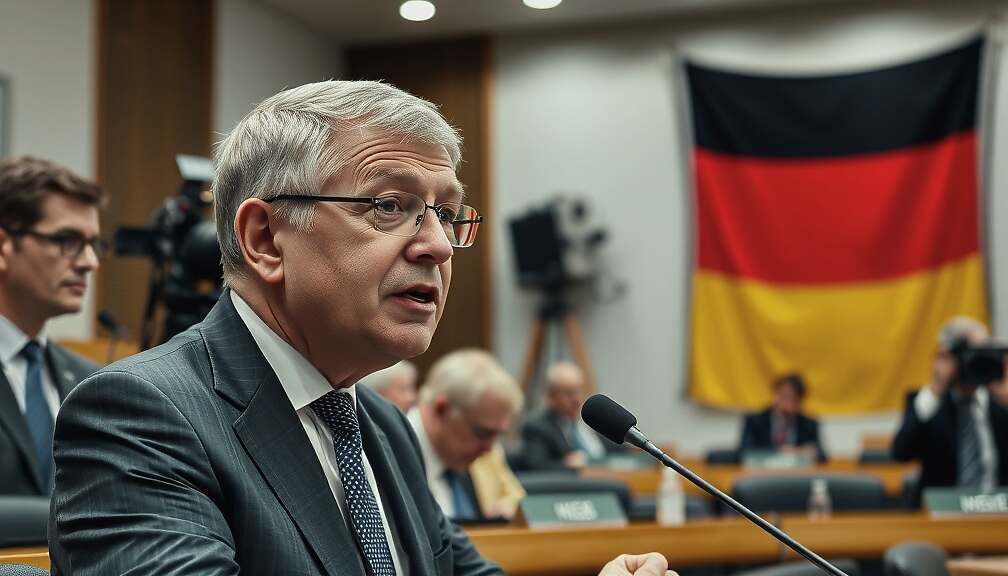
Anton Hofreiter, chairman of the European Committee of the German Bundestag and member of the Greens, called for an intergovernmental fund to finance Ukraine that would exclude Hungary. In an interview with the TV station „Welt” on Thursday, he explained that such a fund would be in Germany’s security interests.
Hofreiter said that the fund should be set up by the remaining 25 EU member states, and that Hungary’s participation was not required-and it might even be unnecessary for the Czech Republic or Slovakia. He argued that a collective financing mechanism would prevent individual states from having to shoulder a disproportionately high share of debt for their aid to Ukraine.
According to Hofreiter, it would be difficult for countries to act on their own, as each would add to its own national debt. Instead, the fund would guarantee the financing, pool contributions from the 25 states, and disburse the money to Ukraine. This way the burden is not assigned to any single member state or tied to any specific debt.
He also insisted that the frozen Russian state assets inside the EU must be seized at the earliest opportunity. While acknowledging that Chancellor Friedrich Merz (CDU) is on the correct side regarding those assets, Hofreiter warned that any new initiative would require a clear majority beforehand. He lamented that Merz had been pressured to back out when he tried to push the measure forward, and urged Germany to gain better influence in European policy by first ensuring that such proposals can actually be implemented.
In addition, Hofreiter demanded stricter investment restrictions in Hungary. He said the EU and Germany should toughen their approach toward Hungary. The German politician was particularly critical of the large German arms company Rheinmetall, which is allowed to invest millions-indeed billions-in Hungary. Hofreiter highlighted Hungary’s close ties with Russia and China and the risk that proprietary information could leak from Hungary to those countries, especially concerning a defense contractor. He urged the EU and Germany to increase pressure on Hungarian leader Viktor Orbán and to make it clear to Rheinmetall that such investments would not be supported.