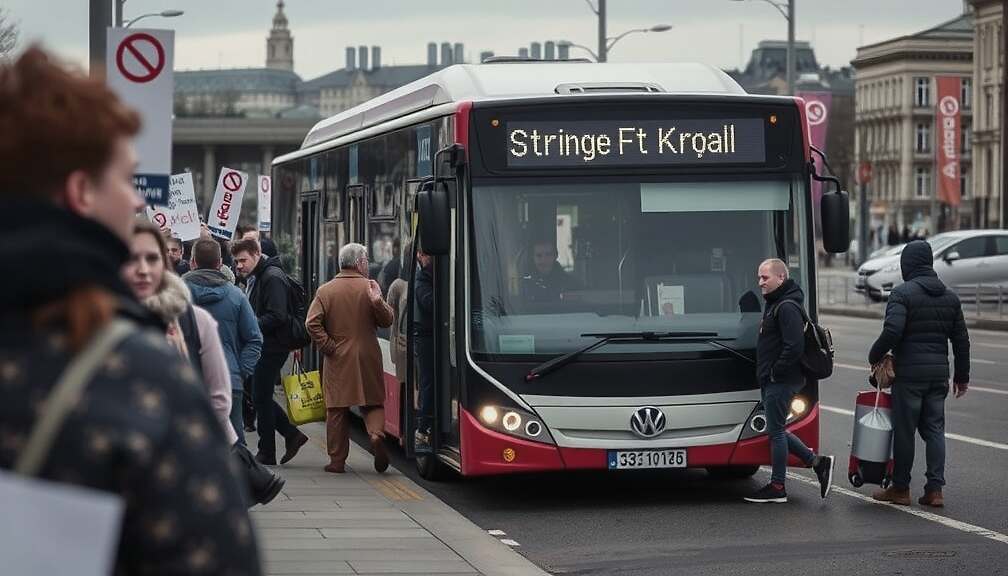
A warning strike began on Thursday morning in several German states, mainly affecting Bavaria, Hamburg, North Rhine‑Westphalia and Saxony‑Anhalt. In Hesse and Saarland the stoppages were called off last minute. The walk‑outs usually shut down buses, U‑trains and trams; regional and S‑Bahn services from Deutsche Bahn remain operational. In some areas, such as Halle (Saale), special emergency timetables have been put in place.
This is the third joint industrial action under the national tariff round, during which working conditions for roughly 100,000 employees across 150 companies are being negotiated. The strike may continue for several days in some states, as Verdi – the transport workers’ union – has set different demands in each region. The main proposals include shortening the weekly working week and shift lengths, and higher premiums for night and weekend service. The goal is to ease employee burdens, curb high turnover, and safeguard public transport as a vital public service.
Verdi deputy chair Christine Behle defended the action, saying that “more money is needed for local transport nationwide”. She insists that a single company’s strike is insufficient; a nationwide movement is required to demonstrate that the issue is a systemic under‑funding problem, not an isolated incident. Behle noted that only in five states are workers demanding additional pay, while the core issues revolve around working‑time relief and extended rest periods. She highlighted the current overload, frequent sickness absences, and the sector’s attractiveness problem, especially among younger people.
On calls to restrict the right to strike, Behle clarified that a warning strike only lasts a single day and does not intend to frighten the nation. She stressed that the right to strike is a constitutionally guaranteed fundamental right and cannot be viewed as abuse.