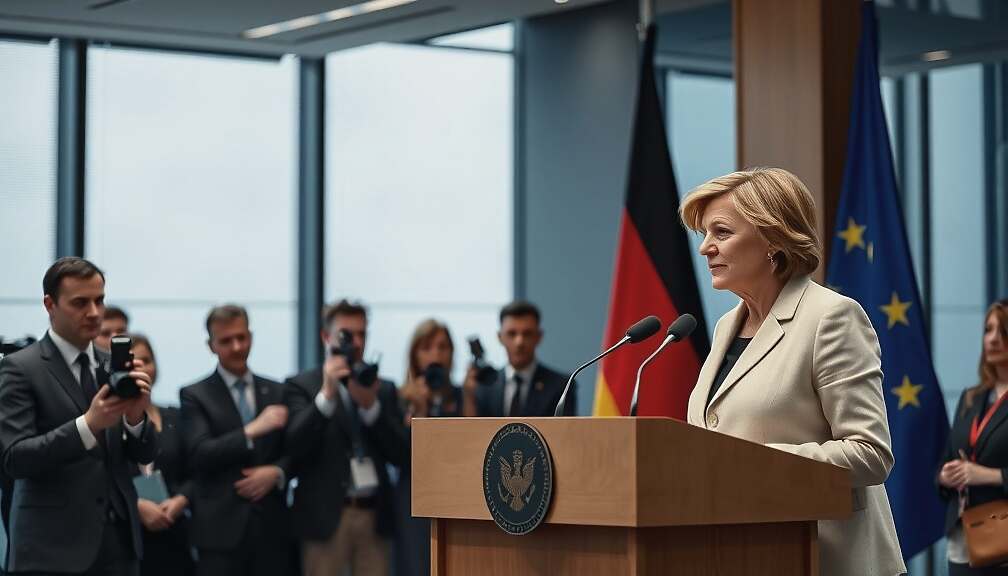
Bundesbildungsministerin Karin Prien (CDU) has announced a major overhaul of the “Demokratie leben” programme, which has been under heavy criticism. According to “Welt am Sonntag” citing its own sources, the ministry will let the funding for more than 200 projects expire at the end of the year.
Prien told the newspaper that, “Despite high motivation and dedicated grassroots effort, the programme objectives are not being met – or not sustainably. The ratio of money spent to results achieved is not satisfactory”. She added that the programme does not adequately reflect societal challenges. “Our approach is: keep what works, terminate what does not, and rebuild what needs reform” she said.
The areas set to be discontinued include the “development of a national infrastructure” – projects of nationwide importance – and the so‑called innovation projects, which were designed to test new work methods and reach additional target groups. Funding organisations affected by this decision comprise the Amadeu Antonio Stiftung, BUND – the German Federation for the Environment and Nature Conservation, the HateAid association, the media outlet Correctiv, the Central Council of Jews in Germany, and the Konrad‑Adenauer Stiftung.
In place of the previously dominant non‑governmental organisations, political foundations, and specialised democracy‑promotion associations, Prien wants to strengthen the role of institutions that are already active on the ground and closely embedded in society. She proposes to involve schools (especially vocational schools), volunteer fire brigades, sports clubs, groups such as the country youth (Landjugen), libraries, and other cultural associations.
Another planned priority area is the digital domain. With young people increasingly turning to the internet for political information – an activity that experts warn can fuel radicalisation – the ministry intends to fund initiatives that look specifically at the influence of gaming (digital games) and chatbots. Digital prevention had previously been a peripheral part of the programme.
A number of institutes have examined and evaluated the measures taken during the last two funding periods. However, within the federal government there remain doubts about the validity of the reports produced. To address this, Prien plans a more independent research process. Future evaluations will no longer be carried out by institutions that also receive funding from the Federal Ministry of Family Affairs, essentially removing the current partnership.
Prien announced that an additional evaluation will accompany the existing one. The key focus will be on real impact and a deeper assessment of effectiveness. “The measurable contribution to social cohesion matters for us” she said. At present, her ministry does not intend to pursue the option of reclaiming funds from previously supported project organisers.