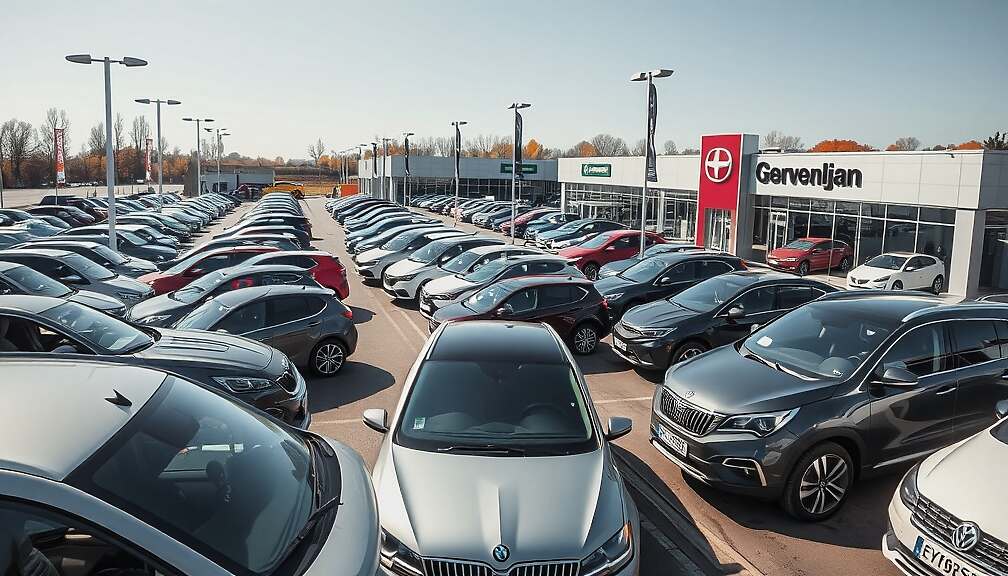
In March 2026, a total of 294,161 brand-new passenger cars were registered in Germany, representing a 16.0 percent increase compared to the previous month. For the first quarter overall, registrations saw a growth of 5.2 percent. Of these new registrations, commercial vehicles grew by 13.0 percent, accounting for 65.0 percent of total new sales, while private new registrations increased by 22.2 percent.
Among German brands, Smart recorded the most significant growth with a 189.6 percent surge, although its share of new registrations remained small at 0.2 percent. Several brands saw double-digit increases, including Opel (+43.0 percent/4.7 percent), Mini (+42.3 percent/1.2 percent), Audi (+25.0 percent/7.5 percent), and BMW (+16.5 percent/8.3 percent). Ford (+8.7 percent/3.2 percent) and VW (+3.2 percent/17.9 percent) also reported registration increases. Conversely, Porsche saw a decline of 12.1 percent (1.0 percent share), and MAN dropped by 47.6 percent (0.0 percent share). VW secured the largest brand share among new registrations at 17.9 percent.
Regarding imported brands, Lynk & Co. and Aston Martin stood out for their extremely high percentage increases, although their overall share of new registrations was barely measurable. Skoda and Hyundai showed double-digit growth, while Seat experienced a decrease. BYD, Leapmotor, Tesla, XPENG, and Alpine managed to record triple-digit gains. In contrast, Maxus and NIO reported noticeable declines. Skoda was the top import brand, accounting for 8.4 percent of new registrations.
SUVs made up 37.1 percent of new cars sold in the third month of the year, marking a 29.0 percent increase. The compact class was the second strongest segment (13.5 percent, up 5.4 percent), followed by small cars (12.2 percent, up 11.0 percent). The mid-range segment posted the second-largest positive change (+20.4 percent, up 8.6 percent).
Registration figures also showed positive trends for Mini-vans (+16.4 percent/0.8 percent), SUVs (+13.9 percent/10.3 percent), camper vans (+12.0 percent/3.0 percent), utilities (+9.6 percent/4.4 percent), and Minis (+7.4 percent/1.8 percent). The upper mid-range segment remained stable, posting a rise of only 0.1 percent compared to the previous year. Declines were noted in the luxury segment (-18.0 percent/0.4 percent), sports cars (-9.3 percent/0.7 percent), and large vans (-3.3 percent/1.7 percent).
Electric cars (BEV) accounted for 70,663 new registrations, representing a robust increase of 66.2 percent and constituting 24.0 percent of all new sales. Hybrid vehicles accounted for 117,846 new registrations, making up 40.1 percent of the total (a 16.2 percent increase), with 29,996 of those being plug-in hybrids (up 13.0 percent / 10.2 percent). Petrol cars comprised 22.8 percent of new registrations (66,959 units), slightly down by 4.9 percent year-over-year. Diesel cars were also declining, with 37,664 units registered (down 0.6 percent), making up 12.8 percent of the total.
Additionally, 1,015 natural gas-powered cars (-18.9 percent/0.3 percent) and one hydrogen-powered vehicle (fuel cell) were newly registered. No new registrations were recorded for liquid natural gas or hydrogen. In the commercial vehicle sector, March showed positive growth, with double-digit increases in tractors (+26.5 percent), including semi-trailers (+32.2 percent), motorized minibuses (+12.0 percent), and other motorized vehicles (+33.8 percent). Only heavy goods trucks saw a slight dip of 1.9 percent.
In the motorcycle sector, the reporting month saw a significant registration surge of +45.5 percent. Overall, 358,592 motor vehicles (+16.7 percent) and 28,816 vehicle trailers (+12.5 percent) were registered in March. Furthermore, owner transfers increased by 9.3 percent, with 41,082 used vehicles and trailers changing ownership (+9.5 percent).