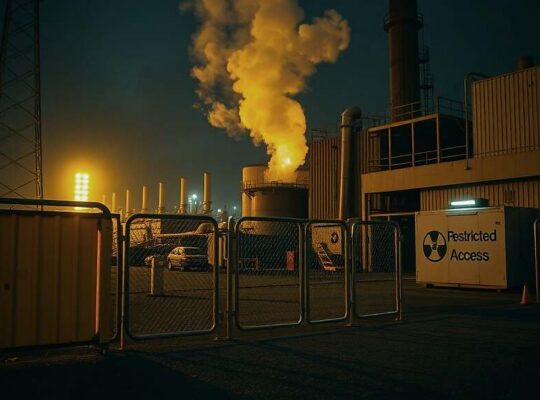
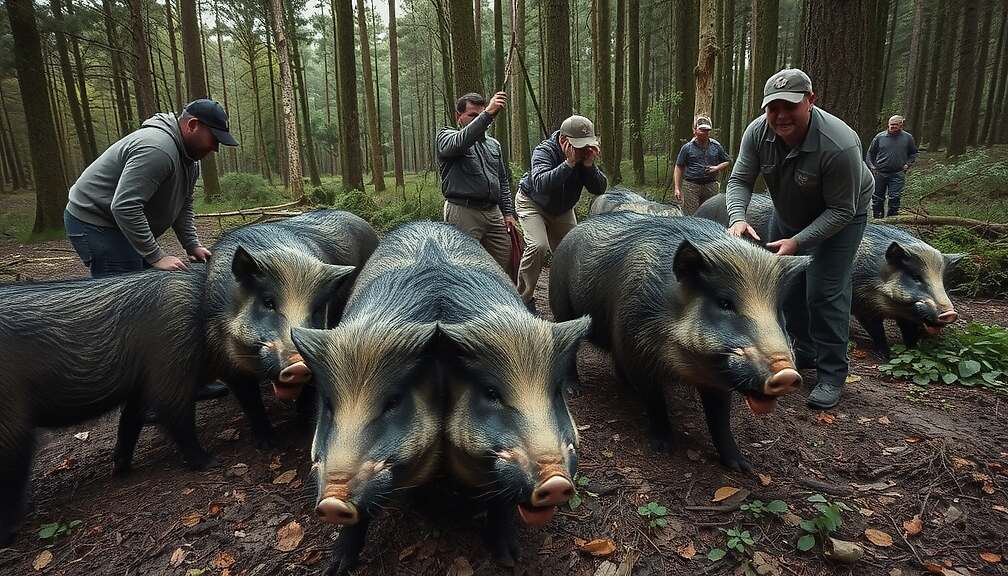
Even forty years after the Chernobyl reactor accident, wild boars in several German states are exceeding the permissible limits for radioactive Cesium-137, making them unfit for sale commercially. According to figures from the Federal Administrative Agency, a total of 2,927 wild boars were “destroyed” in 2025 due to excessive radiation levels, according to the “Bild-Zeitung”. Hunters receive compensation payments from the Federal Administrative Agency for the contaminated game: 204.52 Euros for adult wild boars and 102.26 Euros for piglets. Bavaria was reportedly the most affected state regarding the absolute number of cases, but Baden-Württemberg, Rhineland-Palatinate, Thuringia, and Saxony were also impacted. In 2024, there were 3,099 contaminated wild boars nationwide, and the number reached 7,539 in 2022. Breaking down the figures from the previous year, Bavaria accounted for 2,308 cases, Baden-Württemberg for 491, Rhineland-Palatinate for one, Thuringia for 18, and Saxony for 109. Roe deer are reportedly affected only infrequently according to the report. In Bavaria alone, only four animals with levels exceeding the limit were registered in 2023, compared to 15 in 2020. A spokesperson for the Federal Office for Radiation Protection noted that Cesium-137 has a half-life of about 30 years, meaning that even wild mushrooms or game fed on plants and mushrooms from the forest can still show significantly elevated cesium levels today. The situation is better on cultivated agricultural land. A spokesperson for the Federal Office for Radiation Protection explained that cesium binds to clay minerals in topsoil, which prevents plants from absorbing it, or only allowing them to absorb it in very small amounts through the roots. As a result, food products from agricultural sources contain virtually no Cesium-137 anywhere in Germany.
Mixed