The National Security Council reportedly decided to establish a new committee specifically designed to monitor various supply situations. According to reports citing internal discussions within the cabinet, the federal government feels generally well-equipped to handle persistent global uncertainties related to energy supplies, particularly in light of the situation in Iran and the lack of unfettered passage through the Strait of Hormuz. Despite these tensions, a new committee composed of affected ministries was also planned to ensure oversight at a higher level and allow for rapid intervention if necessary.
During a meeting, Economic Minister Katherina Reiche provided a detailed briefing, assuring attendees that there is no immediate emergency concerning energy supplies and that supply security is guaranteed for the time being. Discussions also covered the status of domestic refineries and their capacity to adjust the production of kerosene and gasoline from crude oil. Currently, Germany sources its crude oil primarily from sources including Norway, America, Kazakhstan, and increasingly from Nigeria. Officials indicated that both the continuous supply of crude oil and the refineries’ proven capacity to produce necessary products suggest no crisis situation exists.
Furthermore, the council addressed Germany’s preparation to participate in securing the Strait of Hormuz. Following prior discussions in Paris, the government stated its readiness to contribute mining vessels and aerial reconnaissance capabilities to the mission, contingent upon an international resolution and a mandate approved by the Bundestag.
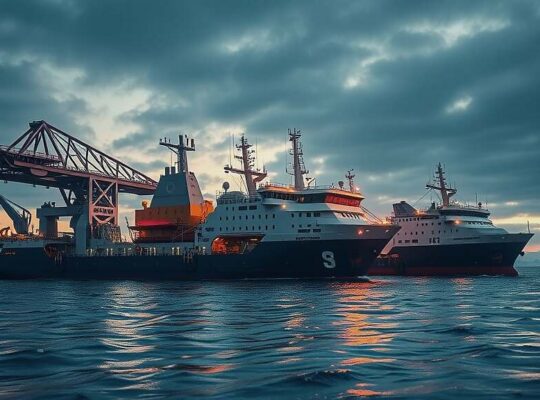
The council also formulated a resolution regarding countermeasures against Russia’s shadow fleet, which continues to transport Russian oil through the Baltic Sea despite existing EU sanctions. Recently, vessels from this fleet have been observed moving more frequently through German waters; this escalation was apparently linked to stricter controls implemented by Sweden, which has reportedly detained and inspected tankers. German authorities, however, maintained a more cautious posture.
The National Security Council brings together relevant ministers responsible for foreign and security policy, alongside representatives from security agencies and intelligence services. Officials from the federal states, including the Lower Saxony Prime Minister, were also invited to participate in the discussions.