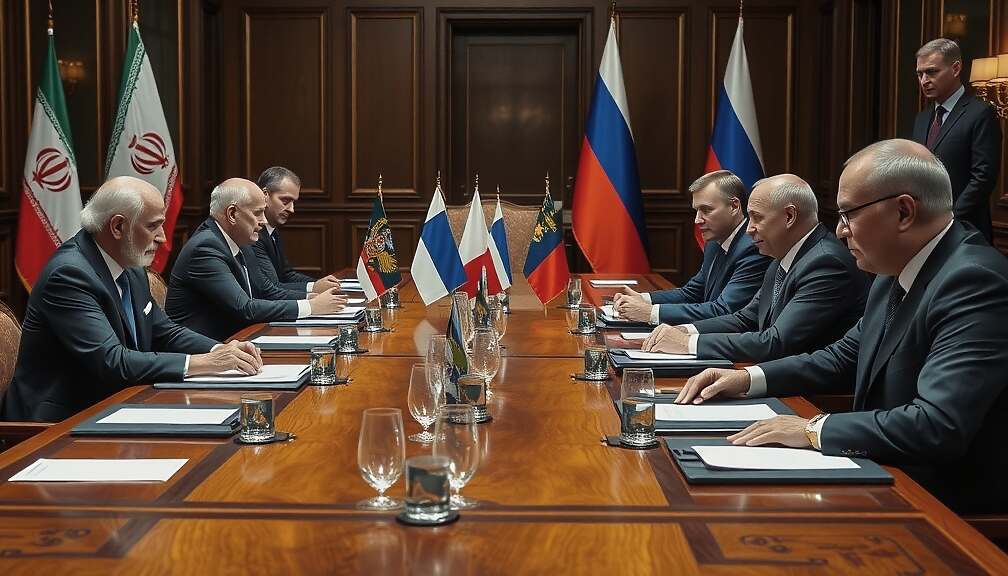
Iran’s Foreign Minister, Abbas Araghchi, recently held a meeting with Russian President Vladimir Putin in St. Petersburg. Russian state news agency Tass reported that Putin praised the Iranian people as “brave and heroic” and commended their stand for sovereignty. Furthermore, Russia affirmed its commitment to doing “everything within its power to establish peace in the Middle East as quickly as possible” confirming the intention to continue “strategic relations with Iran”.
The diplomatic activities prior to his trip to Russia were diverse. Araghchi had previously visited Pakistan, where he presented a list detailing several “red lines” agreed upon by Tehran, intended for onward transmission to the United States. These points included provisions regarding Iran’s nuclear program and the critical situation in the Strait of Hormuz. Describing his time in Pakistan as a “very successful visit” following “good consultations with our friends” Araghchi highlighted the productive nature of the discussions.
His itinerary included a stopover in Oman, which Araghchi referred to as a “friendly neighboring country that has taken a very positive position in this war”. Given that both Iran and Oman are littoral states bordering the Strait of Hormuz, consultations on the matter were deemed “essential”. The Iranian minister emphasized that safe transit through the Strait is a “vital global concern” stating that collaboration between the two neighboring states is necessary to safeguard their mutual interests. He concluded that the discussions resulted in agreements to continue expert-level consultations due to the many shared commonalities between the two nations.
The geopolitical backdrop for these discussions involves stalled talks between the US and Iran. These talks stalled over the weekend after US President Donald Trump canceled the travel of US envoys to Pakistan. Meanwhile, US media sources report that Iran may have privately submitted a new proposal advocating for the reopening of the Strait of Hormuz. However, Tehran reportedly stipulated that any negotiations must first wait until the conflict ends and until guarantees are provided that it will not be restarted.