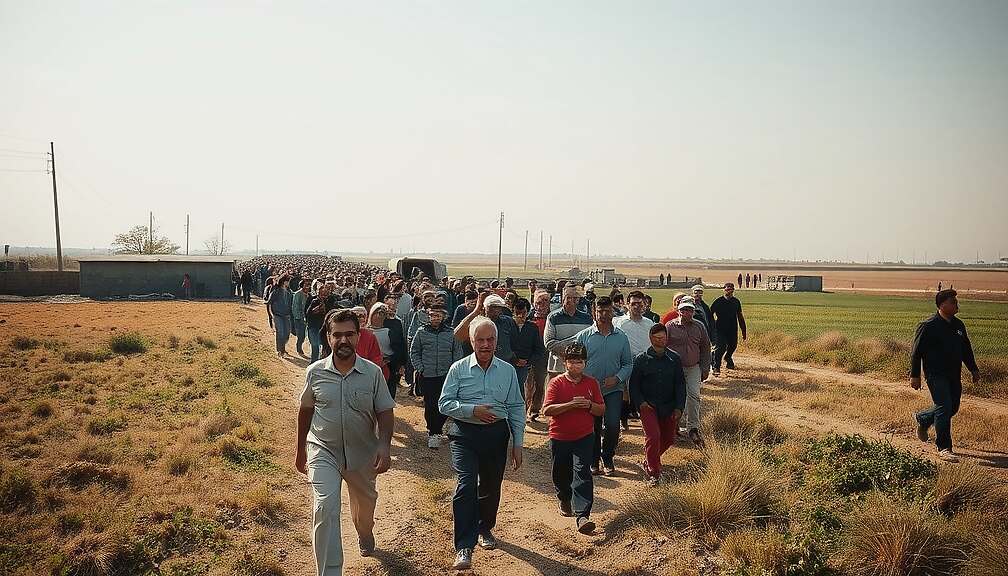
According to the UN Refugee Agency (UNHCR), 1.614 million refugees have returned to Syria since the fall of the Assad regime on December 8, 2024. The World am Sonntag reported these figures based on UNHCR data.
These returns originated from several countries: 634,000 Syrians returned from Turkey, 621,000 from Lebanon, and 284,000 from Jordan, reaching these cumulative numbers as of April 16, 2026. The UNHCR list does not name Germany separately, but includes the country in a group of “Other Countries” accounting for approximately 6,100 returnees.
In Germany, establishing a framework for a large-scale return of Syrian refugees requires preliminary status revocations for certain groups. The Federal Office for Migration and Refugees (Bamf) conducts these checks to determine if a recognized asylum seeker still requires the protected status previously granted. However, the office, as confirmed by The World am Sonntag, has not yet begun these comprehensive checks; currently, they only take place “on occasion” such as after unauthorized returns or serious crimes.
The Bamf argues that for a revocation procedure to be valid, the change in the situation in the home country must be substantial, permanent, and not merely temporary. This criterion, they state, can only be established after a considerable period and a stabilization of the conditions. While the office’s latest country report from November noted a “tendency toward a consistent downward trend in the overall number of conflict incidents and deaths since the change of government” the report emphasized that “the economic and humanitarian situation in Syria remains desolate”. When pressed for an estimate on when broader revocation checks might be possible, the Bamf stated that it was impossible to predict such a timeline.
Alexander Throm, the spokesperson for the CDU faction in the Bundestag, asserted that the claim to protection for many Syrian refugees has expired following the fall of the Assad regime, given the renewed possibility of safe return. He called on the government to immediately initiate systematic revocation checks, beginning with young, single, Sunni men who receive citizen’s benefits or have recently arrived in Germany. According to Throm, this would not require new legislation but is merely “a matter of ongoing governmental action”.
In contrast, the SPD coalition partner adopted a more reserved stance. Sebastian Fiedler, the party’s chair for the Bundestag’s Interior Committee, told The World am Sonntag that implementing revocation checks is not their top priority. He argued that the immediate focus must be on bringing criminals back, noting that much work remains in that area. He expressed skepticism about the Bamf’s personnel capacity to re-evaluate the protected status of hundreds of thousands of Syrians, concluding that the current focus should be on supporting voluntary returns.