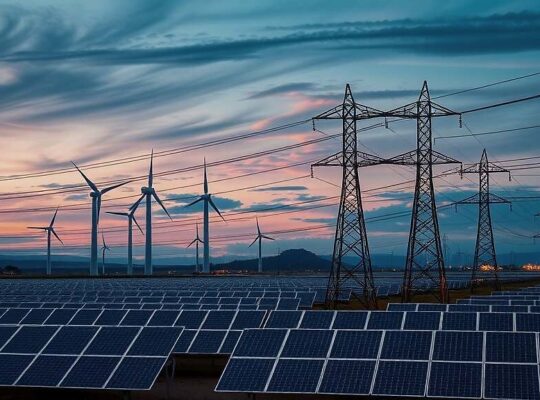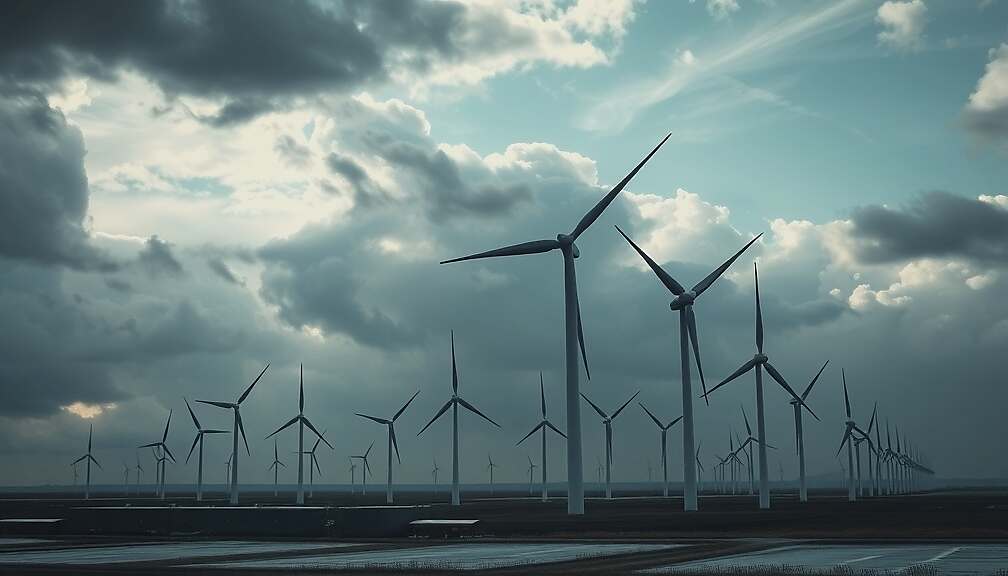
The German Federal Association for Wind Energy (BWE) is strongly urging the federal government to urgently revise its plans for reforming the energy transition. BWE President Bärbel Heidebroek warned on the radio program of sender ntv that if the proposed drafts are adopted as they stand, they would effectively be a stop sign for renewable energy expansion. She fears this could trigger an investment freeze on new wind projects-a crisis far more severe than the one seen in 2017, potentially leading to numerous job losses.
The industry spokesperson specifically criticized the blueprints for the Renewable Energy Sources Act (EEG) and the national grid package. According to Heidebroek, the EEG poses a threat to the economic viability of the sector, while the grid package threatens to remove critical expansion areas.
She directed her concerns at Economics Minister Katherina Reiche (CDU), noting that the suggestions originated from the Federal Ministry of Economics. Previous warnings, she remarked, seem to have been ignored: the first draft was made public in January, and although the industry submitted many proposals since then, the second draft appears to be identical.
The association views the lack of communication from the Ministry of Economics as a fundamental problem, emphasizing that dialogue is extremely scarce. Heidebroek stated that this sentiment is shared not only by her association and Katherina Reiche but by many other industry bodies and corporations as well.
Furthermore, the sector is irritated by what the BWE describes as internal contradictions within the government’s plans for wind expansion. While the federal climate protection program announced additional auctions for twelve gigawatts, Heidebroek pointed out that the necessary law to implement these projects-the new EEG-is missing, and the current draft includes no mention of additional tenders.
In Heidebroek’s assessment, the federal government holds the power to determine whether the expansion of wind energy will face a setback similar to 2017. That past crisis occurred when the Grand Coalition altered the compensation regime within the EEG, which caused an immediate plunge in wind power development. At that time, manufacturers were forced to lay off employees and close facilities, and the industry took years to recover. Currently, orders are back, and companies are profitable.
Local governments are also exerting pressure on the Ministry of Economics. Heidebroek mentioned that states requested the supplementary auctions, as many CDU politicians from the regional level argued that Germany needs more localized wind energy, given that the economy is already electrifying and cannot reverse course. They wish to invest in wind turbines to create jobs, a goal that should, in principle, be welcomed by the Minister of Economics. Unfortunately, her legislative proposals have had the opposite effect.