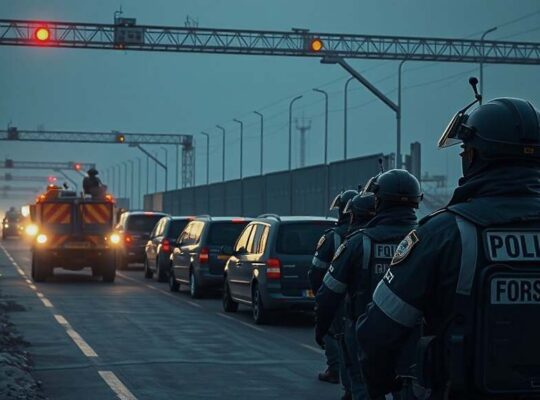
North Rhine-Westphalia’s Interior Minister, Herbert Reul, stated that he opposes terminating border controls with European neighboring countries. Reul, a CDU politician, told the “Kölner Stadt-Anzeiger,” “As a European, I am not a fervent fan of border controls. But we see that there are evidently effects when we look a little more closely at entry points.” He added that this measures serves as a building block to bring order, particularly to migration issues.
The discussion is set against the backdrop of the new Common European Asylum System (GEAS) becoming operational. This system stipulates, among other things, that border controls primarily take place at the EU’s external borders. Correspondingly, EU Migration Commissioner Magnus Brunner has demanded the removal of these border controls, noting the “drastic” decline in asylum numbers.
Reactions among the governing coalitions in the state parliament (CDU and Greens) have been varied. Gregor Golland, a CDU interior expert, dismissed the EU’s demands, asserting that “border controls are a complete success-both in the fight against illegal migration and against crime.” Golland told the newspaper that the significant drop in refugee numbers was not accidental. “Thousands of arrest warrants could be executed, and a lot of weapons and drugs were seized,” the politician said. He argued that the benefits of the controls far outweigh the costs and therefore they should continue for as long as possible.
In contrast, Julia Höller, the Greens’ spokesperson for domestic policy, holds a different view. As someone from Bonn, she noted that “people already have to spend too much time in traffic due to decades of neglected infrastructure.” She criticized the EU Commission, calling it “embarrassing for the German Federal Interior Minister” that the Commission insists on sweeping border controls “now as a mere token gesture.”