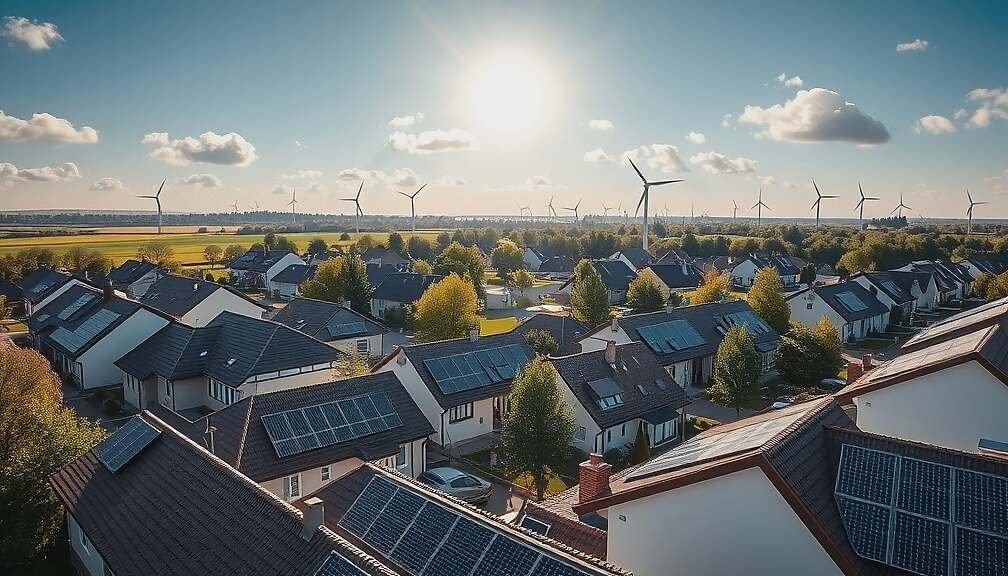
More and more Germans are switching to green electricity rates, according to an evaluation by the comparison portal Verivox. The newspapers of the Funke Media Group reported that 81 percent of all electricity contracts concluded through the platform this year utilize tariffs powered by 100 percent renewable energy sources-a new high. Just five years ago, the proportion of switching customers opting for green energy was around 68 percent, indicating a continuous rise in demand since then, as reported by the portal.
According to Verivox, the appeal of these green tariffs is driven by more than just environmental and climate protection; often, they are now the most affordable option for consumers. Thorsten Storck, an energy expert at Verivox and speaking to the Funke Media Group, noted, “It doesn’t always have to be environmental and climate protection that is the main motivation for signing up for a green electricity tariff.” He further stated that in many cases, offers derived 100 percent from renewable sources are now also the most economical choices.
Current average household electricity rates, according to the comparison portal, stand at 31.2 cents per kilowatt-hour (kWh). In contrast, the lowest green tariffs average only 21.9 cents. This difference presents a significant saving potential; for a three-person household consuming 4,000 kWh annually, switching from an average tariff to a cheaper green rate could save approximately 400 euros per year.
It is important to note that this doesn’t necessarily mean the electricity originates exclusively from renewable plants within Germany. Many providers acquire certificates for electricity genuinely produced within Germany or other European countries. Verivox reported that in 2026, these specific tariffs accounted for roughly 67 percent of all electricity switches processed through the portal.
An additional 14 percent of contracts involved tariffs that not only supply green energy but also actively promote the expansion of renewables. These providers verify this commitment through certifications such as the “Grüner Strom Label” or “OK Power.” Even these supportive offers significantly undercut the overall market price, averaging 22.7 cents per kWh. For a household using 4,000 kWh annually, Verivox calculates that these tariffs provide a potential saving of around 340 euros each year.