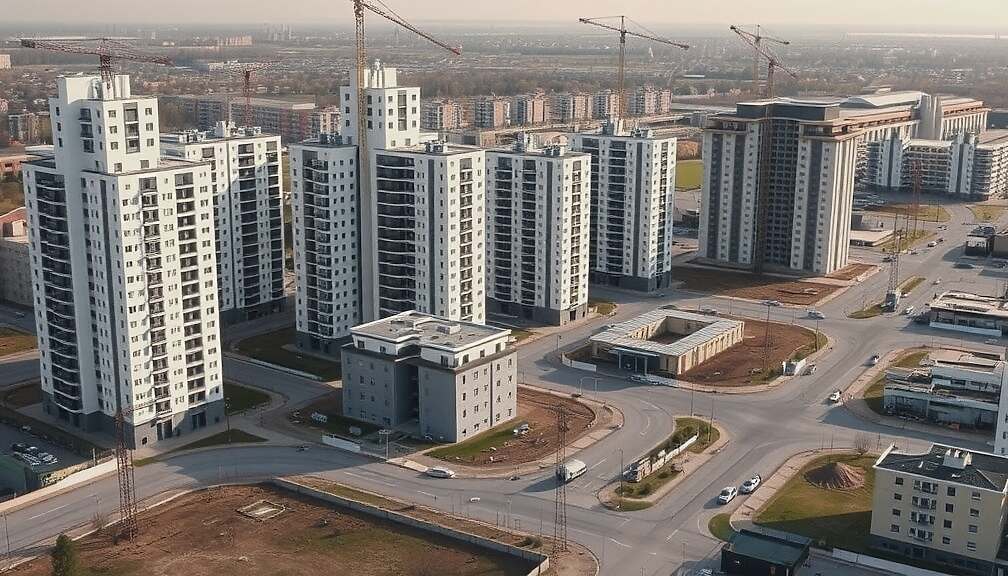
In April 2026, 20,200 housing units received building permits in Germany. According to the Federal Statistical Office (Destatis), this figure represents a 9.2 percent increase, or 1,700 more permits, compared to April 2025. Specifically, the number of new residential units approved rose by 10.3 percent, reaching 16,900. Meanwhile, permits for housing generated through the renovation of existing buildings increased by 4.0 percent over the previous year, adding 100 units to reach 3,200.
Looking at the broader period from January to April 2026, construction permits were granted for a total of 83,700 residential units, combining both new and existing structures. This quarterly figure marked a substantial growth of 13.2 percent, or 9,800 units, compared to the January to April 2025 period.
In new residential construction alone, 68,400 units were approved during the first four months of 2026-a 13.4 percent rise, or 8,100 more than the corresponding period last year. Within this category, permits for single-family homes increased by 11.7 percent (an addition of 1,700), totaling 15,900. Two-family homes saw an even sharper increase of 22.9 percent (+900), totaling 4,900 approved units. Multi-family homes, which remain the largest building type by volume, received 44,300 new permits, representing a 14.7 percent jump (+5,700) compared to the same time last year. Conversely, housing in nursing homes declined by 4.4 percent year-over-year, decreasing by 150 units to 3,400.
Furthermore, 1,500 units were permitted in new non-residential buildings between January and April 2026, an increase of 35.1 percent (+400). These permits include various uses, such as caretaker apartments in school buildings or urban apartments situated above commercial spaces.
In terms of refurbishment projects across both residential and non-residential properties, 13,700 units were permitted during the same January-April 2026 timeframe. Statisticians noted that this signifies a 10.2 percent increase, or 1,300 more units, than in the parallel period of 2025.