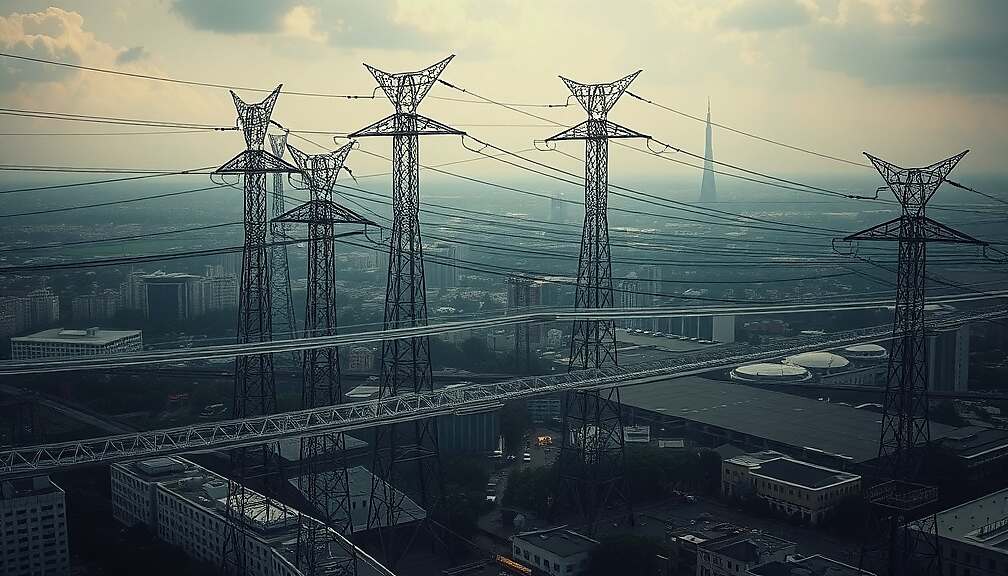
German electricity network operators have expressed significant reservations regarding planned exceptions for underground cabling in new high-voltage network expansion rules. Although the operators generally welcomed the proposal that prioritizes overhead lines during system expansion, they warned that the specific exceptions for underground sections could severely complicate the approval process.
The discussion focused on the proposed amendment to the Federal Demand Plan Act. Operators argue that the new regulations could substantially prolong permitting procedures. Amprion, for instance, strongly criticized the possibility of switching between overhead and underground cables along the same route. The company described this method of alternating lines as a “sewing machine,” anticipating that it would lead to additional technical reviews, regulatory risks, and considerable delays.
TransnetBW viewed the draft law positively in principle, yet they voiced concerns about the exceptions, stating that such changes could postpone construction projects by up to two years. Furthermore, they noted that every transition between an overhead and an underground line incurs extra costs of approximately 70 million euros and requires extensive technical infrastructure.
RheinEnergie also pointed to the higher investment and operational costs associated with underground cables. They argued that these cables have a shorter lifespan than overhead lines and would unnecessarily inflate electricity prices. The initial expectation that underground cables would enjoy higher public acceptance has not materialized.
Conversely, a law firm presented results from a comparison study between the two types of infrastructure. This study indicated that changing already-planned underground projects to overhead lines could delay the commissioning of those projects by four to seven years due to the need for new planning and approval processes. The firm also highlighted public acceptance issues concerning the visual impact of overhead lines on the landscape. Regarding grid safety, it was argued that attacks on underground cables are more difficult to carry out than on overhead lines.
The regional association for Renewable Energies in Lower Saxony and Bremen also cautioned against redesigning projects already underway, noting that transitioning from underground to overhead lines would introduce uncertainty, delays, and increased costs. In regions already experiencing high stresses on the network, this transition could also provoke public acceptance problems.
Overall, the draft law-the Second Act to Amend the Federal Demand Plan Act-is designed to accelerate and make the expansion of Germany’s high-voltage network more demand-appropriate and cost-efficient. Among its plans is the inclusion of 45 additional network expansion projects in the federal demand plan. Additionally, 13 existing projects are slated for modification, bringing the total number of priority projects to 58.