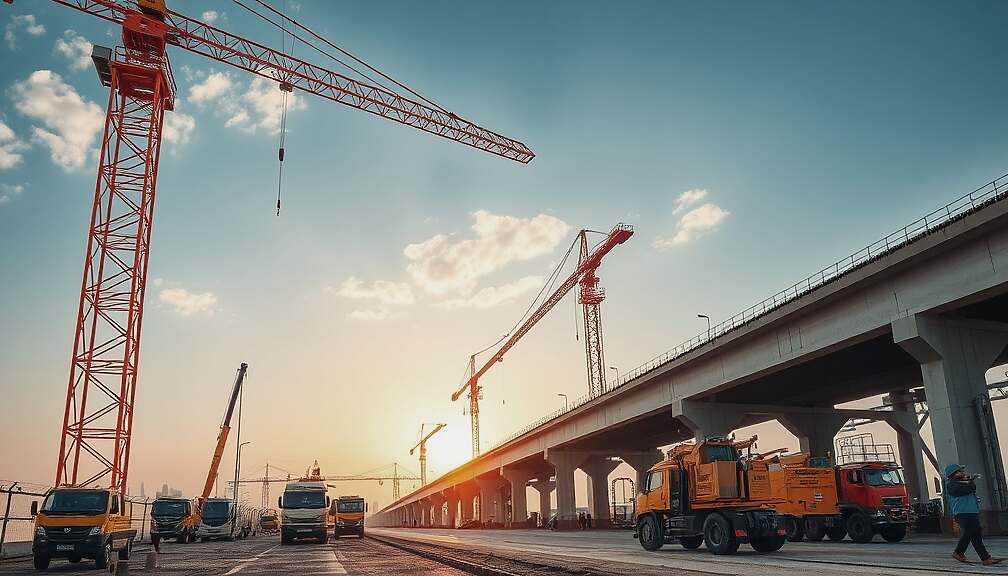
Federal Transport Minister Patrick Schnieder (CDU) has welcomed the agreement reached by the black-red coalition regarding faster approvals for infrastructure projects. The CDU politician explained that the Infrastructure Law signifies a “paradigm shift,” clarifying which infrastructure is strategically vital for Germany and ensuring it receives appropriate weight in decision-making processes. According to Schnieder, modern planning and approval procedures are essential for robust transport networks, economic strength, and defensive infrastructure, goals he believes the Infrastructure Future Law will achieve.
He expressed satisfaction that the bill could proceed to its second and third readings in the Bundestag on Friday. This follow-up occurs after the SPD and the Ministry of the Environment, led by Carsten Schneider, abandoned their blockade. The initial concerns centered on the removal of immediate nature protection compensation for certain building projects and the resulting limitation on the right of environmental associations to sue. To counter potential reductions in nature space, a complementary “Natural Area Needs Law” was proposed, but this measure is currently being blocked by the CDU/CSU Union.
Rebutting the concerns, Minister Schnieder maintained that the Infrastructure Future Law does not lower environmental standards. However, a scientific advisory committee established by the federal government offers a different assessment of the law’s consequences, stating that the acceleration legislation “goes explicitly at the expense of nature and environmental protection.” The expert body for environmental issues described the proposal as highly problematic considering Germany’s poor natural state and ongoing ecological problems, particularly anthropogenic climate change and biodiversity loss.
These experts further elaborated that the law prioritizes infrastructure development-which is not compatible with sustainability goals-over environmental and nature conservation. They argued that the government was following a questionable symbolic dynamic rather than considering the current state of knowledge or the possibilities for expedited implementation, risking only marginal acceleration while simultaneously diminishing environmental protection levels.
During the parliamentary process, several changes were made to the government’s draft law. Schnieder noted these changes included introducing a cut-off date regulation, expanding the possibility of compensation for energy infrastructure projects, and broadening the scope of overriding public interest to include system-critical shipping facilities and essential measures for flood and coastal protection.