Stefan Evers, the CDU’s candidate for the Berlin election, intends to push forward the plans for residential development around Tempelhofer Feld without holding a new referendum or public consultation. Speaking to Tagesspiegel, the acting CDU state chairman stated that the upcoming September 20 election should be viewed as a decisive vote on these development plans.
While a direct public referendum is not legally possible in Berlin, the black-red coalition had previously agreed to introduce a “top-down” referendum regarding the peripheral building plans. Evers is now renouncing this approach. He acknowledges that a referendum took place in 2014, which prohibited construction on the former airport land, but argues that the urgency of the housing crisis today is vastly different from twelve years ago, and he cannot ignore it.
He emphasized that while the election provides a significant democratic opportunity, he believes that clear action must precede the vote. Evers confirmed that if CDU voters express confidence in him, he will champion changes to the existing law designed to protect Tempelhofer Feld.
Evers generally supported the development plans, stressing the urgent need for action to solve the severe housing shortage impacting the entire city. He argued that to tackle the housing crisis successfully, “we have to be bolder.”
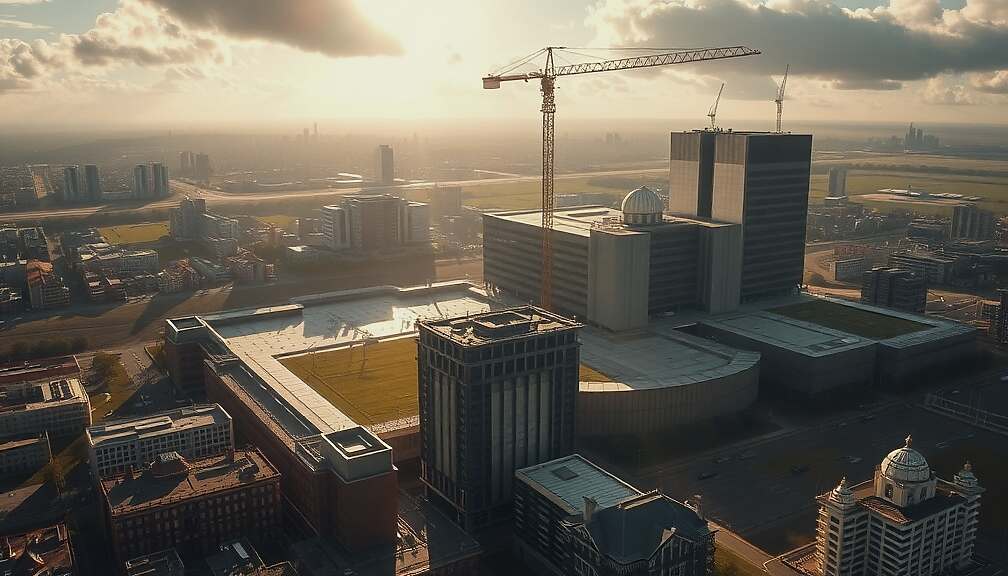
For the CDU politician, this peripheral development offering residential properties is also a matter of fairness. He questioned why people should accept the development of green inner courtyards in the eastern parts of the city while a “gigantic potential for housing” in the city center remains unused. Evers added that 50,000 people could gain new homes on the edge of Tempelhofer Feld without affecting the 200 hectares of green space.
He dismissed criticism of the development plans coming from the Greens and the SPD. Instead, he cited polls suggesting that even a majority of Green voters supported the peripheral construction. Evers contended, “People realize that the housing shortage is a problem that affects all of us, and they should expect bold solutions from politics. The SPD and the Greens should face this responsibility as well.”
The financial and culture senator praised the successes of the current black-red Senate administration. He stated he would not hide the accomplishments of the CDU-led government, pointing to restored civic offices, renewed police support, Berlin’s rise in educational rankings, and simplified building processes. However, he concluded that these successes “can only be a beginning; there is still much to do.”