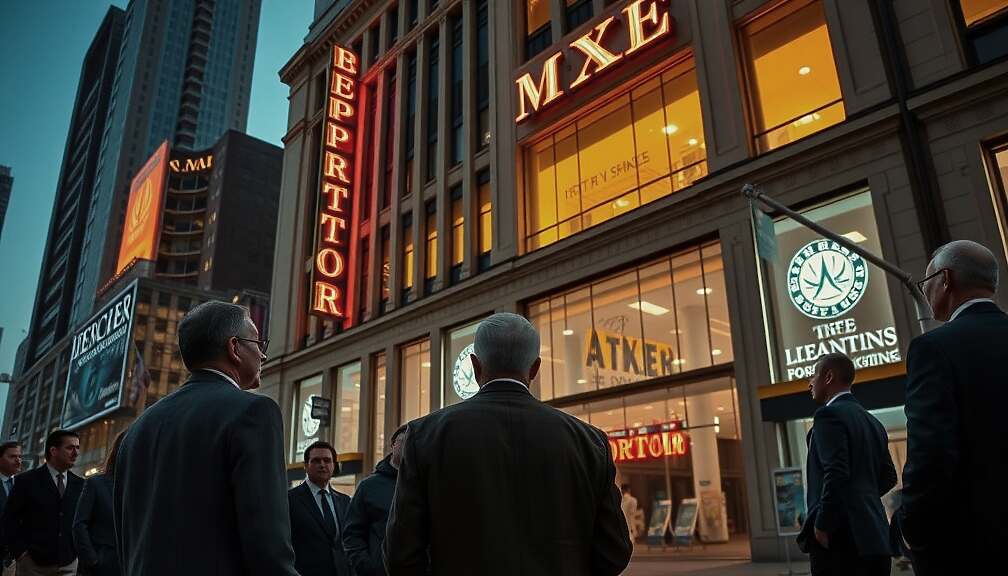
In response to Galeria’s announcement that it will be reviewing the profitability of 33 department stores across Germany, the German Association of Cities has called for the early involvement of municipal authorities. Christian Schuchardt, the Chief Executive of the association, emphasized to “Funke” newspapers that the future of the individual locations has not been definitively determined. He stressed that cities must be brought into the discussions about the stores’ future quickly, noting that this approach has proven successful in previous restructuring phases to find personalized solutions for both specific sites and employees.
The struggling department store chain recently announced that it plans to put 33 of its total 83 branches under review. At the affected sites, the company intends to negotiate rental conditions and structural adjustments with landlords. If an agreement cannot be reached, the respective store may be closed. Galeria’s key criteria for these decisions are the house’s earning potential and the rent burden. Separately, the company is also examining options for relocation to different properties or opening new stores.
Schuchardt pointed out that each location faces different challenges, but the primary threat facing the company is the growing competition from online retail. This competition diminishes sales and profit, making it difficult to invest in individual buildings. High rent demands and long-term contracts with property owners further complicate matters. Schuchardt stated that the ideal outcome would be finding a viable compromise with landlords that allows the sites to remain unchanged.
However, if stores cannot be saved, he added, there must be swift and conclusive concepts developed for their repurposing to prevent a downward spiral in affected city center districts. While urban transformation is not automatic, cities, the retail sector, the real estate industry, and civil society are required to work together to create new concepts.
For this reason, the Association of Cities is appealing to federal and state governments to further develop programs for urban revitalization. Schuchardt further explained that funding programs should be structured to more strongly promote holistic solutions where both private and public investment can interact. Historically, following previous Galeria closures, many former department stores have been converted into mixed-use properties featuring retail, offices, apartments, or cultural and educational facilities, or are still in the process of being developed.