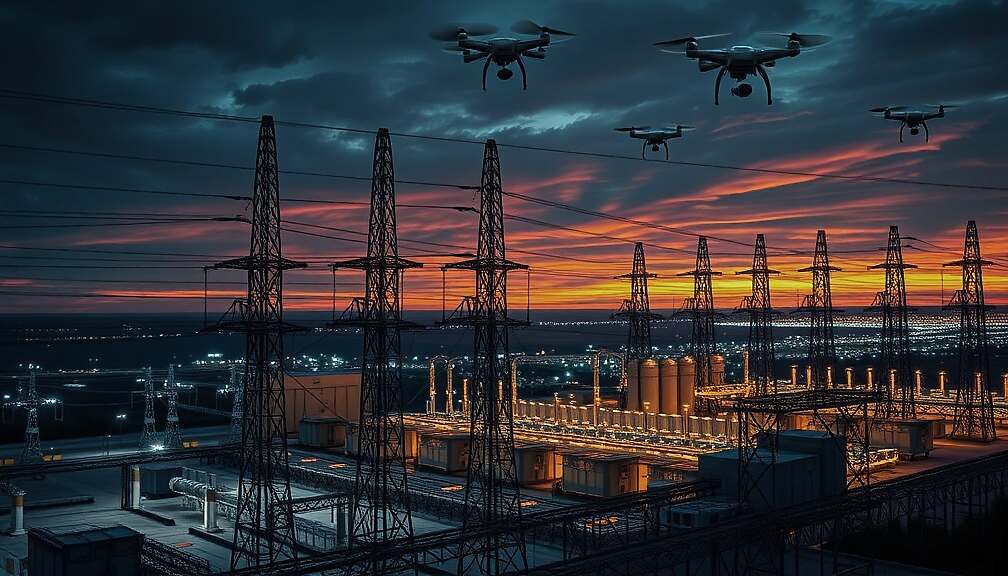
Tennet Germany, the country’s largest electricity grid operator, is advocating for enhanced cooperation with security agencies as it faces a range of increasing threats to its infrastructure. Speaking to Spiegel, Kathrin Günther, Chief Transformation Officer at Tennet, stressed that the goal is certainly not to be authorized to shoot down a drone over a substation. She noted that there are significant security concerns and many unresolved liability issues surrounding such actions.
The company is currently subjected to diverse attacks, ranging from cyber incursions and espionage attempts to physical drone overflights. Günther argues that instead of getting bogged down in fundamental debates about protection, “we must finally take action” to safeguard critical infrastructure.
Central to Tennet’s proposal is the demand for clear lines of responsibility and established reporting chains. Although Tennet currently operates drone monitoring systems, Günther is calling for a technical link to official government drone defense centers. In the current process, crucial time is lost between a drone being reported to the police and the authorities being able to react. As she explained, by the time first responders arrive, the drone has often flown far away.
Günther also criticized the idea of developing drone defense laws at the state level. While Bayern recently announced plans to introduce such legislation, she pointed out that Tennet’s network spans multiple federal states. The worst-case scenario, she warned, would be if each state created its own specific rules, since attackers and drones do not respect state borders. She firmly believes a unified, nationwide regulation is necessary.
Furthermore, the manager is pressing political leaders to relax data protection rules when monitoring critical infrastructure. Currently, Tennet is only permitted to film the internal areas of its facilities with cameras. “That way, we only see a danger when it is already on the grounds,” Günther stated, adding that this situation must change. While she finds the transparency obligations required of Tennet as a grid operator understandable, she suggested they also need to debate the point at which publicly available information about critical infrastructure itself becomes a security risk.