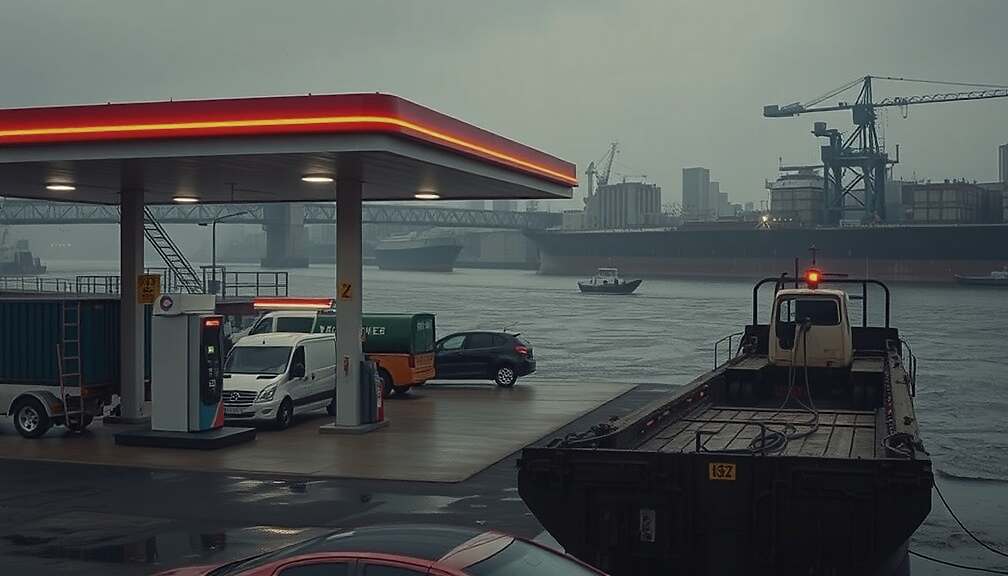
The new fuel tax discount has significantly boosted demand for gasoline and diesel, straining a logistics system already severely burdened by extremely low water levels on the Rhine River. In several cities across western and southwestern Germany, individual gas stations have experienced intermittent shortages of fuel since the beginning of the week. The gas station interest group reported that cities affected include Cologne, Bonn, Koblenz, Mannheim, Heidelberg, Freiburg, Frankfurt, and Aschaffenburg.
Herbert W. Rabl, representing the gas station interest group which oversees approximately 1,300 stations, told the Handelsblatt there is no actual fuel shortage. He explained that the core problem is that the unusually high demand is overwhelming the standard delivery cycle. Rabl stated that, due to this high demand, the delivery rhythm has come under pressure. The association has been logging stations running out of fuel since Monday, particularly diesel, but also Super E10.
This surge in demand coincides with the fuel discount implemented at the start of October. Economists had warned just before this effect began that in tight markets, high prices typically curb demand. When the government lowers prices, part of this signaling of scarcity disappears, potentially causing consumption to rise further.
Compounding this issue is the substantial restriction of supply via the Rhine. Aral confirmed to the Handelsblatt that some gas stations, especially those in the Rhineland, are facing temporary supply limitations, particularly for diesel. The company cited both the low water levels and the high demand as reasons. Shell attributes its current restrictions to the low water in the Rhine. In the Wesseling location, the corporation is partially diverting supply using tank wagons, trucks, and pipelines. Relief is not expected soon; according to the six-week forecast from the Federal Institute for Water Resources, the chance of a significant rise in the Rhine level in Kaub is not anticipated until mid-October.