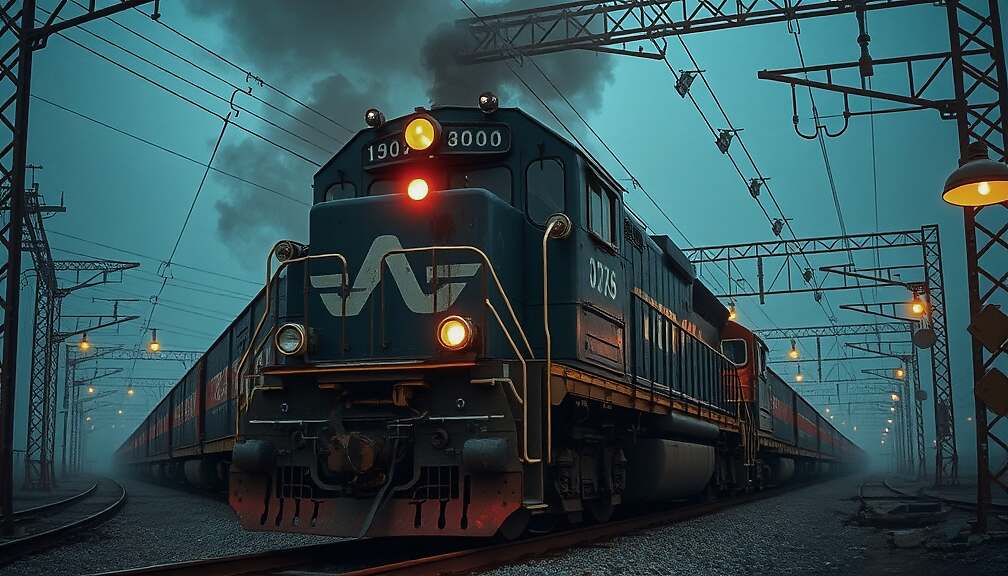
Despite numerous renovation efforts, German rail operator Deutsche Bahn continues to struggle with faults in infrastructure components such as switches, overhead lines, and control centers. According to Philipp Nagl, Chairman of the DB InfraGO board, the number of delay incidents linked to disrupted infrastructure has increased by 40 percent by 2026.
Nagl attributed these ongoing issues to severe weather, noting that the very cold winter and extremely hot summer put particular strain on the equipment. He explained that extreme temperatures damaged the infrastructure and complicated quick repairs. Overall, the pace of equipment breakdown-encompassing switches, overhead lines, and control centers across Germany-is currently outpacing the speed of repairs.
Since 2024, the rail company’s infrastructure subsidiary has been shutting down sections of track for months to allow for complete modernization. These corridor renovations have faced criticism, even from Federal Minister of Transport Steffen Bilger (CDU), because trains continued to run late even immediately following the construction work. Nonetheless, Nagl is determined to maintain and proceed with these comprehensive sanitary projects.
Regarding delays that occurred on the recently renewed route between Hamburg and Berlin, Nagl pointed to issues with the signaling and safety technology. This technology was not fully operational when the section reopened, forcing long-distance trains to operate at reduced speeds in certain areas. High-speed trains utilize a specialized train protection system, which necessitates the route being tested a second time to activate it. Nagl noted that while these validation runs could theoretically be included in the closure period, doing so would also require regional and freight traffic to wait longer, despite them not using this particular signaling system. He confirmed that all such validation runs were completed as of Sunday. To minimize delays upon future route openings, the company will shift away from allowing all trains to run simultaneously and fully integrated immediately after completion.
In principle, however, the railway manager stated that the punctuality of trains on renovated sections is generally higher than before the construction began. Nevertheless, passengers must continue to be patient until the positive effects become noticeable across the entire network, which is the timeline Deutsche Bahn promised at the start of the corridor renovations. Nagl assured that passengers will begin to experience the benefits when the critical foundational renovations are finished. He cited the Berlin-Hannover route for next year and the Hamburg-Hannover route for 2029 as examples of major milestones. He promised that once these major routes are completed, trains across Germany should become punctually reliable throughout the country.