Morten Wierod, the CEO of the Swiss industrial giant ABB, has expressed doubts regarding Germany’s capacity for structural reform and has issued a warning about potential job losses across Europe. Although he acknowledges that political bodies have recognized the economic challenges and demonstrated a willingness to implement change, Wierod told the “Welt am Sonntag” that the real difficulty lies in execution. He stated that he suspects the ability to genuinely enforce the necessary measures at the required pace.
Wierod emphasized that Germany holds a special responsibility in this context, calling it “the locomotive of Europe.” As the EU’s largest economy, he argued that Germany must take the lead and pull other nations along, making its economic trajectory critically important for the continent as a whole.
He cautioned that if these profound reforms fail to materialize, the risk of mass unemployment in Europe grows. The CEO noted that the consequences of insufficient competitiveness often manifest only after a substantial delay. He explained, “If investments are happening elsewhere and factories are no longer being built here, the consequences are often only noticed years later. By then, the decision has long been made.”
Wierod suggested that Europe must focus on strengthening demand growth and controlling high energy and raw material costs. He pointed out that domestic demand grew significantly and dynamically in the US and Asia over many years, allowing companies to invest where they found customers. He criticized Europe for having concentrated too heavily on regulation in recent years. “So, we do not lack talent. However, Europe has concentrated more on regulation than on innovation over many years,” the ABB CEO concluded.
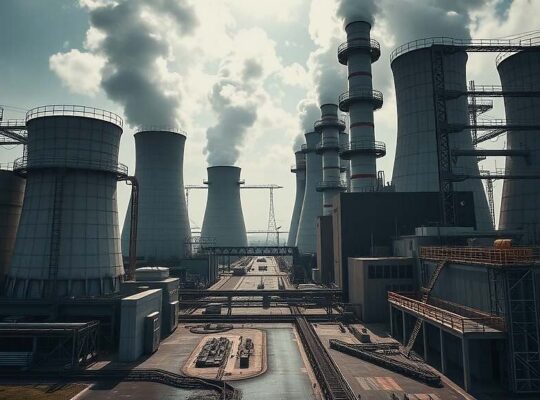
He also criticized Germany’s energy policy, asserting that the premature shutdown of nuclear power plants was a mistake. Given the rising electricity demand driven by the industrial and economic electrification, Wierod stressed that Europe needs to develop new energy sources. Furthermore, he sees great potential in small modular nuclear reactors, which could supply power to industrial facilities and data centers in the future.