The Düsseldorf-based Rheinmetall corporation is challenging political criticisms that it is solely responsible for delays in defense projects commissioned by the German armed forces (Bundeswehr).
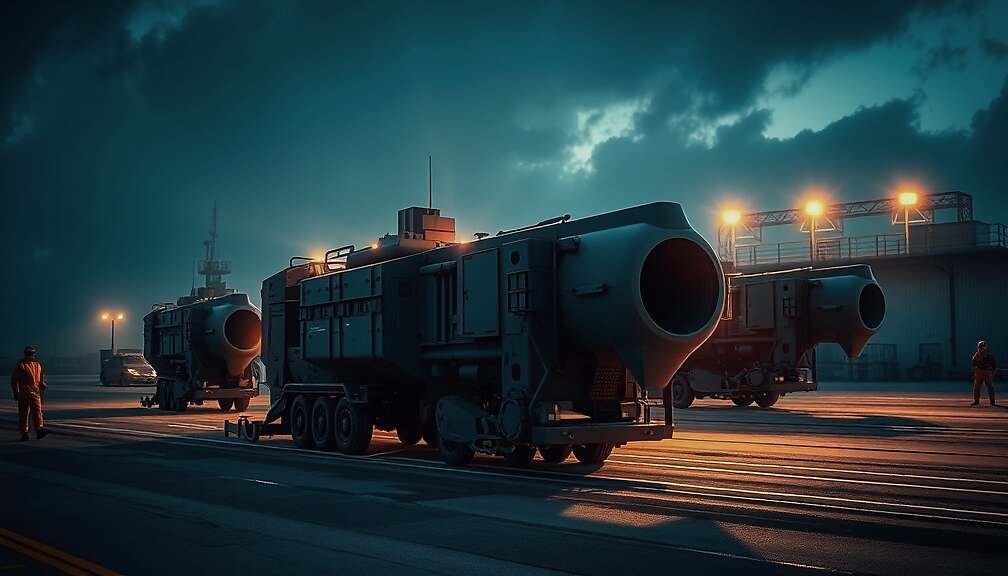
Regarding the Skyranger project, the company stated that the primary cause of the delays was the customer’s decision in February 2025 to use the new B0 driving module instead of the originally contracted Schwerer Waffenträger (Heavy Weapon Carrier) chassis. The company noted that they had explicitly warned the client at the time about the delays involved because the B0 module was not yet fully developed, and the customer made this choice knowing the potential consequences. The B0 chassis is scheduled to enter industrial trials in January of next year and will go through official authority tests in the third quarter. Rheinmetall further stated that despite the official trials not being completed, they are already delivering production Skyranger vehicles on the B0 module in the third quarter of 2027, taking on the risk themselves.
Despite successfully delivering the Skyranger, Rheinmetall acknowledged its own operational issues. A spokesperson admitted that the results of a recent live test against Ukrainian drone pilots in Sweden were unsatisfactory, stating the company “is not where it needs to be.” They plan to learn from these experiences and improve the system, with a mandatory proofs-of-concept firing scheduled for next April, where everything must function perfectly.
The company also faces problems concerning the Heavy Weapon Carrier (Boxer). This 30-millimeter-cannon armored vehicle, intended to replace the Wiesel for infantry, was ordered by the Bundeswehr in 123 units for 2.7 billion euros. According to an earlier magazine report, the Boxer project faces a delay of at least eleven months. Defense Minister Boris Pistorius (SPD) specifically criticized the situation in July, noting that eight vehicles were not delivered on time.
A Rheinmetall spokesperson responded to this, stating that while some delays are attributable to the industry, others stem from the customer’s side, noting that the customer also has participation obligations. The company claimed that the fulfillment of these obligations is difficult because the customer has a highly complex organization. For instance, the complete list of equipment should have been provided by September 2025 but was only finalized in May 2026, with changes involving radio equipment. Rheinmetall emphasized that they did everything possible to deliver the eight vehicles for the Bundeswehr, and once this was done, they were “very surprised” by the minister’s negative remarks.