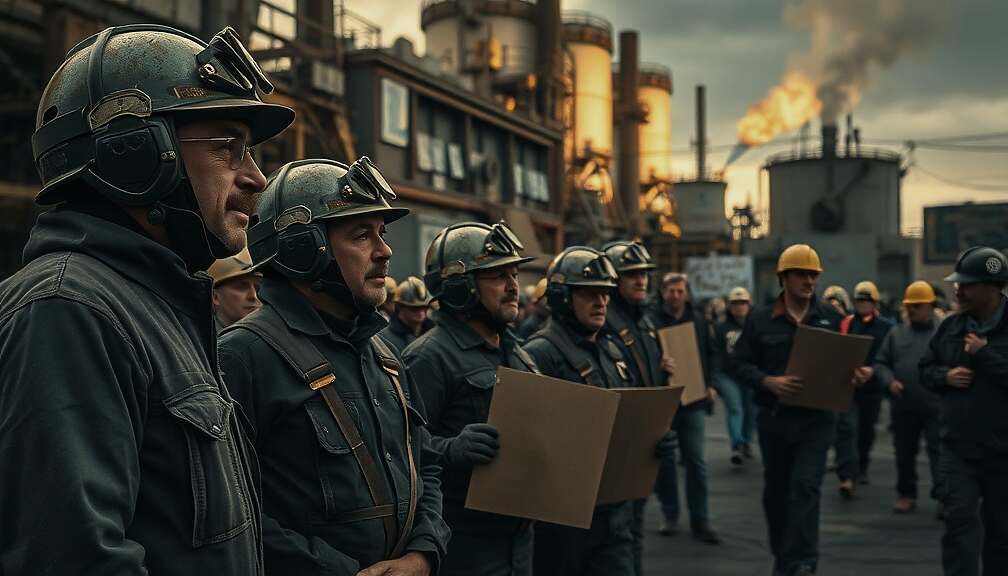
The first warning strikes began in the metal and electrical industry in the night leading up to Sunday. According to the IG Metall union, employees started gathering outside factory gates starting at midnight.
The background to the strikes is the employers’ offer in the second round of collective bargaining negotiations, which the union found inadequate. The employers proposed a wage increase of 1.3 percent starting in July 2028, which equates to an annual rise of 0.6 percent over a 26-month period. The IG Metall strongly criticized this offer, labeling it both a “provocation” and “non-negotiable.”
To exert pressure on the employers, the union plans to conduct warning strikes in over 2,000 workplaces until the end of the week. The IG Metall is demanding a five percent wage increase over a 12-month period, as well as job and location security. Additionally, the union insists that employees in successful companies should receive a collective bonus.
While the employers have presented a gloomy outlook on the industry’s economic situation, the IG Metall points to recent surveys conducted among works council members, which indicated a positive trend.
The second round of negotiations in the metal and electrical sector recently concluded, and the period of peace obligation ended on Saturday. Plans are currently underway to schedule a potential third round of discussions.